

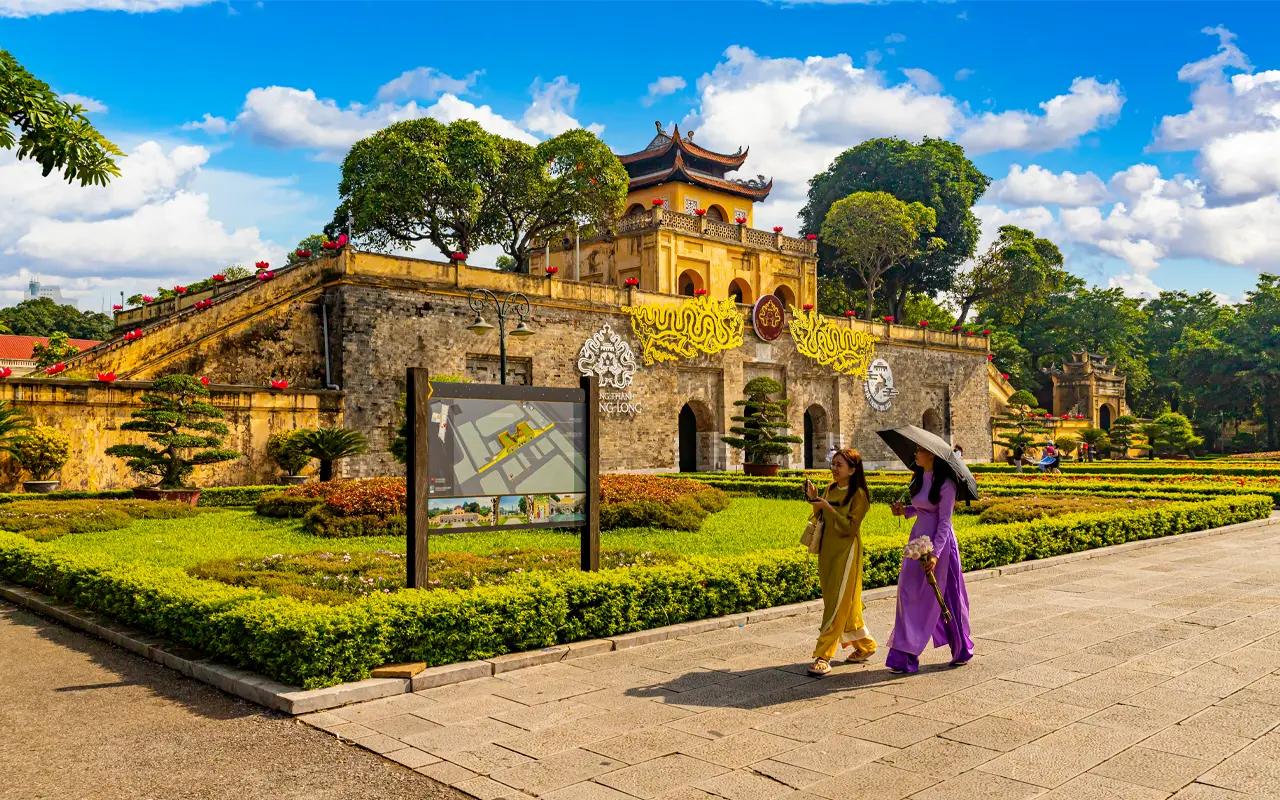
Vietnam National Culture Day
Every country expresses its identity through the stories it tells, the traditions it maintains and the knowledge it passes from one generation to the next. In Vietnam, these connections are recognised through Vietnam National Culture Day (Ngày Văn hóa Việt Nam), an annual national occasion celebrated on November 24.
More than a celebration of traditional arts, historical monuments and artistic achievements, the day recognises the importance of culture in shaping Vietnamese society. It brings attention to the country’s diverse communities, collective memory and living traditions, many of which continue to influence everyday life.
For international travellers, understanding the meaning behind Vietnam National Culture Day offers a different perspective on the country. Its heritage becomes something to understand and engage with, rather than simply observe, whether through the architecture of an ancient capital, the knowledge of a village artisan or the customs surrounding a family meal.
What Is Vietnam National Culture Day?
Vietnam National Culture Day is an annual occasion dedicated to celebrating Vietnamese cultural identity, preserving national heritage, encouraging artistic creativity and promoting cultural participation throughout society.
Observed on November 24, the day recognises culture as an essential part of Vietnam’s development. Its significance extends beyond the preservation of historic buildings or traditional performances to encompass languages, beliefs, customs, literature, craftsmanship and the relationships that connect individuals with their communities.
Unlike traditional festivals associated with particular religious beliefs, agricultural seasons or ancestral ceremonies, Vietnam Culture Day provides a shared national occasion for recognising the many cultural traditions that exist throughout the country.
Vietnam’s 54 officially recognised ethnic groups contribute to a remarkably diverse cultural landscape. Their traditions reflect different environments, historical experiences, spiritual beliefs and ways of organising community life. Celebrating national culture therefore involves recognising both the values that connect Vietnamese people and the differences that distinguish individual communities.
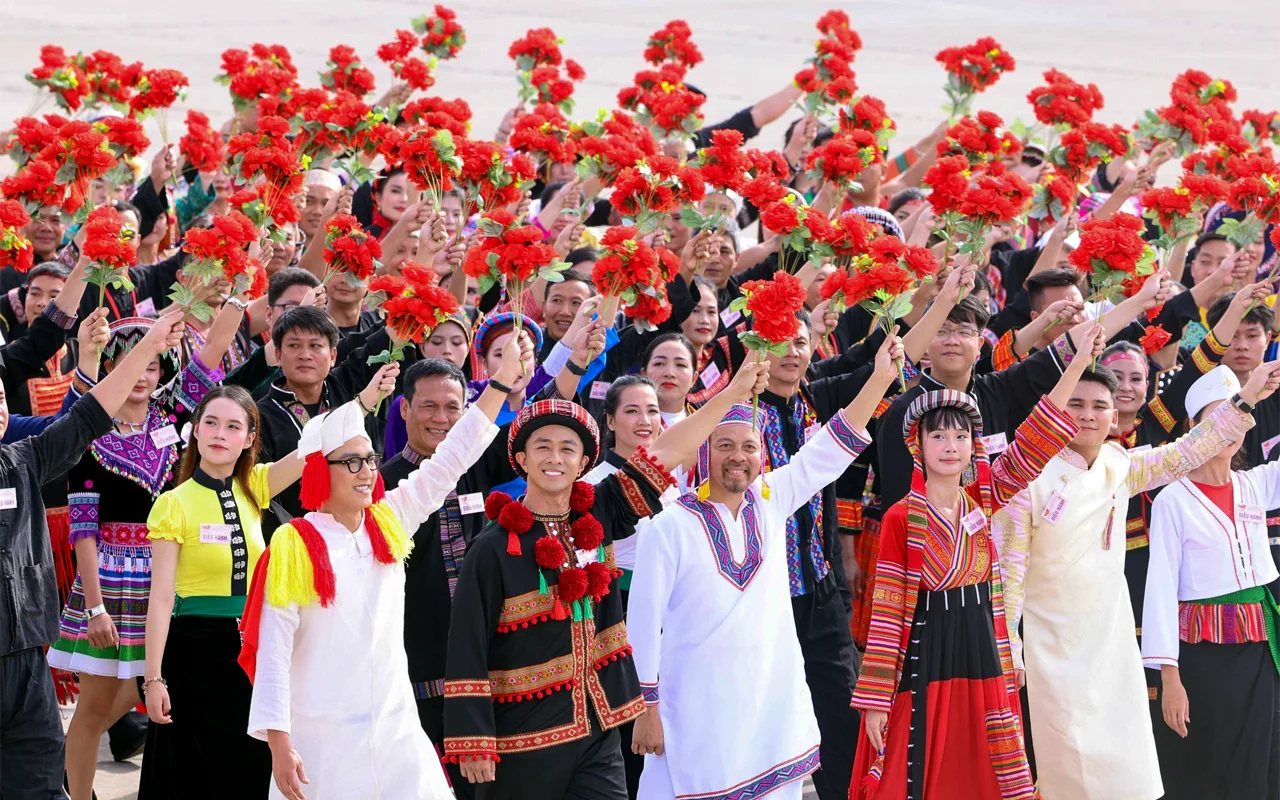
People from various ethnic groups in Vietnam participate in a celebratory parade wearing traditional attire. (site:thethaovanhoa.vn)
Cultural exhibitions, artistic performances, heritage programmes and community activities can form part of the celebrations, with individual destinations developing programmes that reflect their own cultural identities.
Why Does Vietnam Celebrate Culture Day on November 24?
The First National Cultural Conference of 1946
The historical foundation of Vietnam National Culture Day lies in the First National Cultural Conference, which opened at the Hanoi Opera House on November 24, 1946.
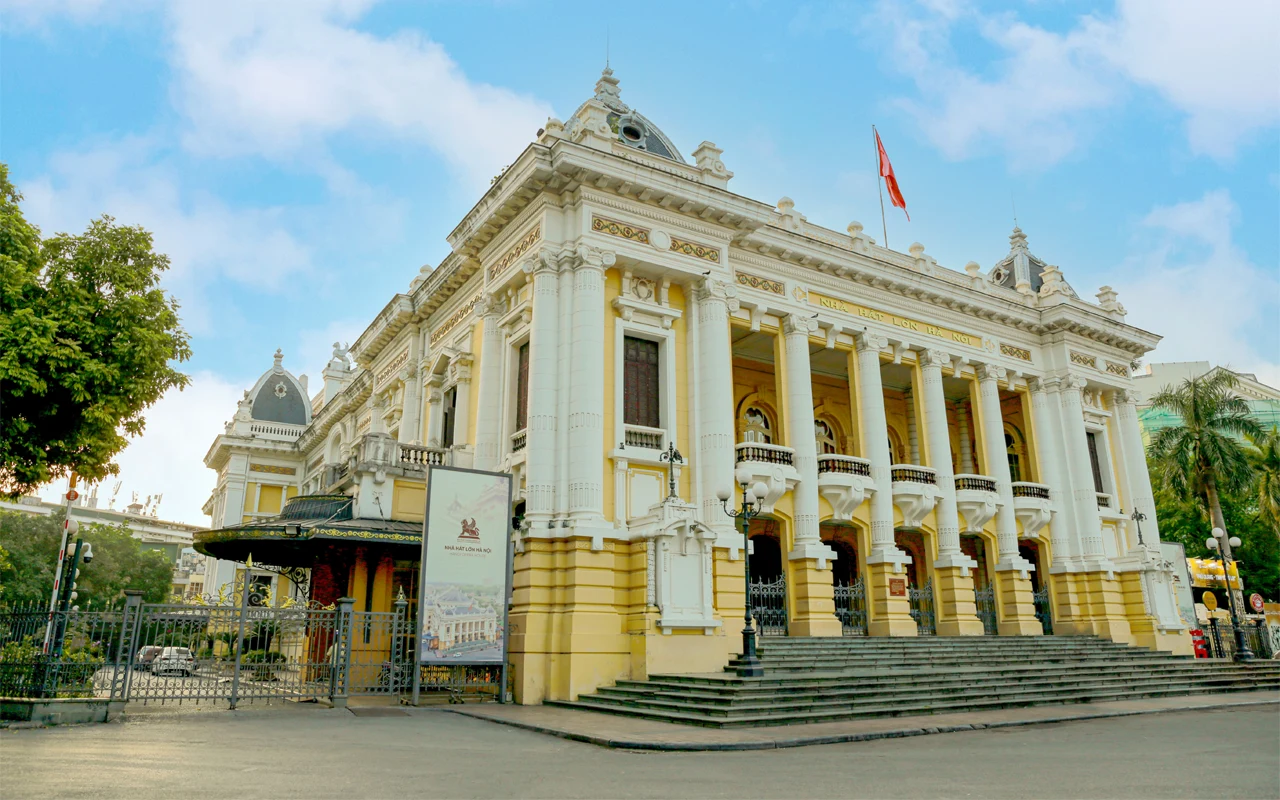
The historic Hanoi Opera House features classic French colonial architecture in the center of Hanoi.
The conference took place during a decisive period in Vietnamese history. Following the declaration of independence on September 2, 1945, the newly established Democratic Republic of Vietnam faced considerable challenges as it sought to consolidate its independence and establish the foundations of a new society.
Political independence raised questions that extended beyond government and administration. How could education contribute to national development? What role should literature and the arts play in society? How could Vietnam preserve its cultural identity while engaging with ideas and knowledge from the wider world?
The First National Cultural Conference brought together more than 200 representatives of Vietnam’s cultural and intellectual communities to discuss these issues. President Ho Chi Minh attended and delivered the opening address, emphasising the importance of culture in guiding the country’s development.
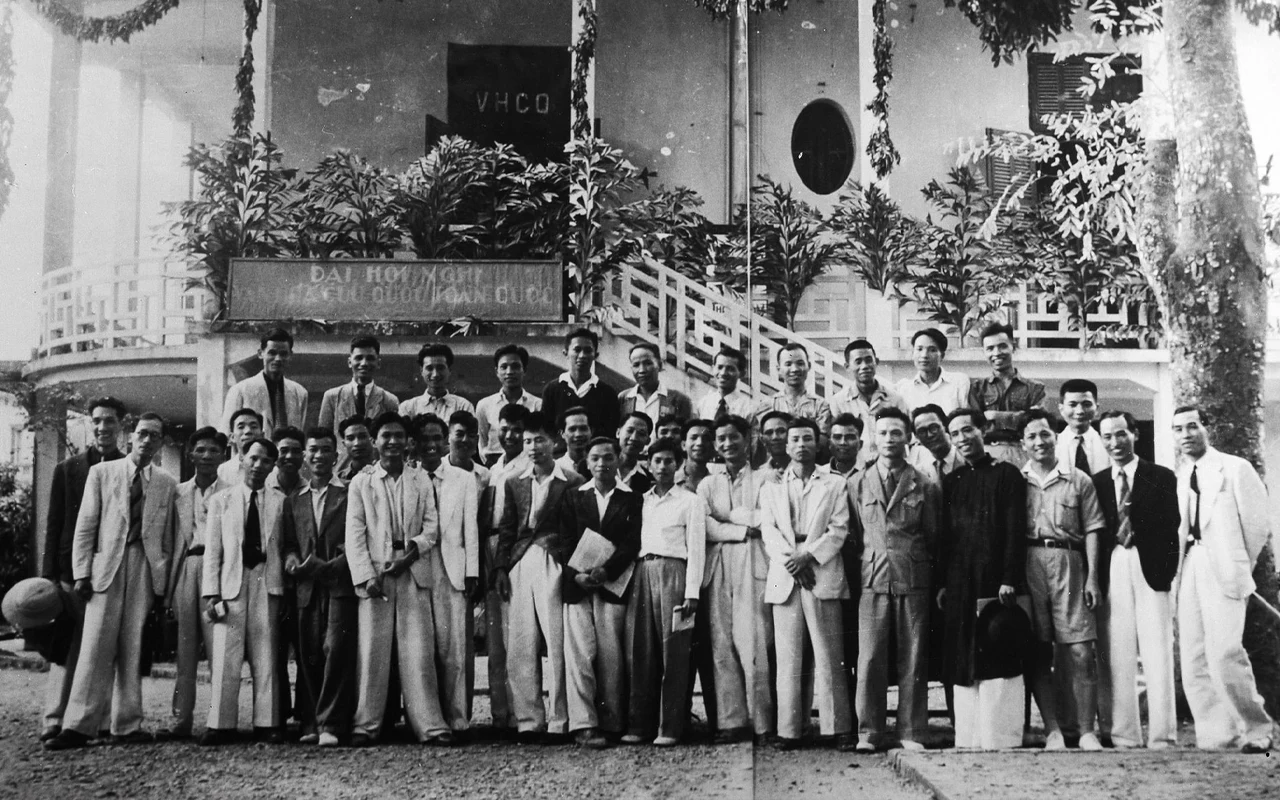
Delegates gather for the first National Cultural Conference in Vietnam. (site:daidoanket.vn)
His address expressed a conviction that would become influential in Vietnamese cultural thought: political independence needed to be accompanied by cultural, intellectual and social development.
The conference established an important historical connection between culture, national identity and the responsibilities of an independent society. Its legacy explains why November 24 was subsequently selected as a national occasion for cultural reflection and celebration.
The Establishment of Vietnam National Culture Day
November 24, 2026, marked the first official nationwide observance of Vietnam National Culture Day. Following Politburo Resolution No. 80-NQ/TW of January 7, 2026, Vietnam’s National Assembly adopted Resolution No. 28/2026/QH16 on April 24, 2026, formally designating November 24 as an annual national cultural occasion. The resolution entered into force on July 1, 2026, with Article 2 providing employees with a day off work on full pay.
Understanding Vietnam Through Its Cultural Identity
Vietnamese cultural identity has developed through centuries of interaction between geography, agriculture, political history, religious traditions and exchanges with neighbouring societies. It cannot be understood through a single historical period, belief system or set of customs.
Although Vietnamese communities maintain different traditions, several cultural themes provide useful insight into the country’s social fabric.
Family, Ancestry and Historical Memory
In many Vietnamese households, an ancestral altar occupies a significant place within the home. Photographs, incense, flowers and offerings express remembrance of deceased family members and maintain a symbolic connection between generations.
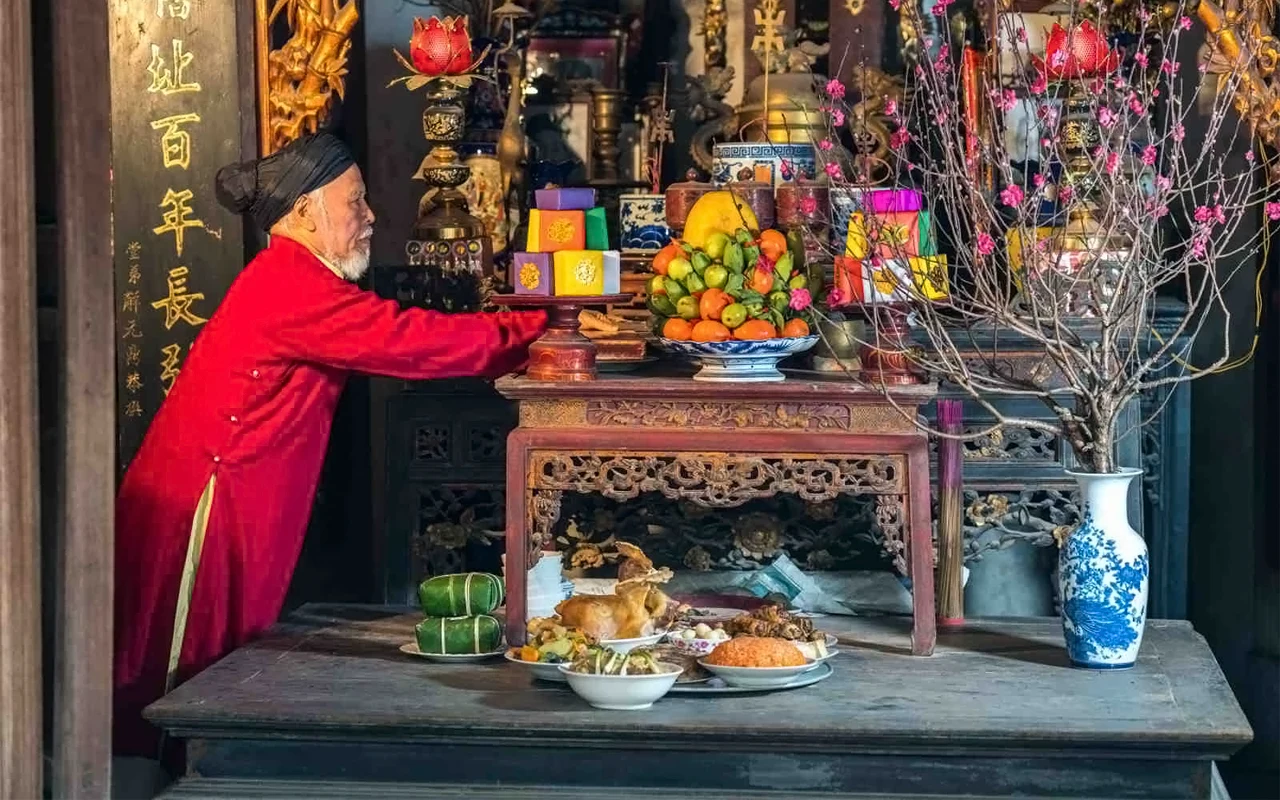
An elderly man in traditional clothing prepares an ancestral altar with food offerings for the Tet holiday.
These traditions become particularly visible during Tet, the Vietnamese Lunar New Year, when families gather, remember their ancestors and renew relationships with relatives.
Ancestor veneration is closely connected with ideas of gratitude, family responsibility and continuity. Its significance is not limited to religious belief; it also provides a framework through which families remember their histories and maintain a sense of belonging.
Similar expressions of remembrance can be found at temples dedicated to historical figures, village founders and national heroes. Through these places and ceremonies, collective memory becomes part of the cultural landscape.
Community and the Importance of Relationships
Village communities have historically played an important role in Vietnamese social organisation. Agricultural cooperation, shared religious spaces, local markets and community festivals helped establish relationships that extended beyond individual households.
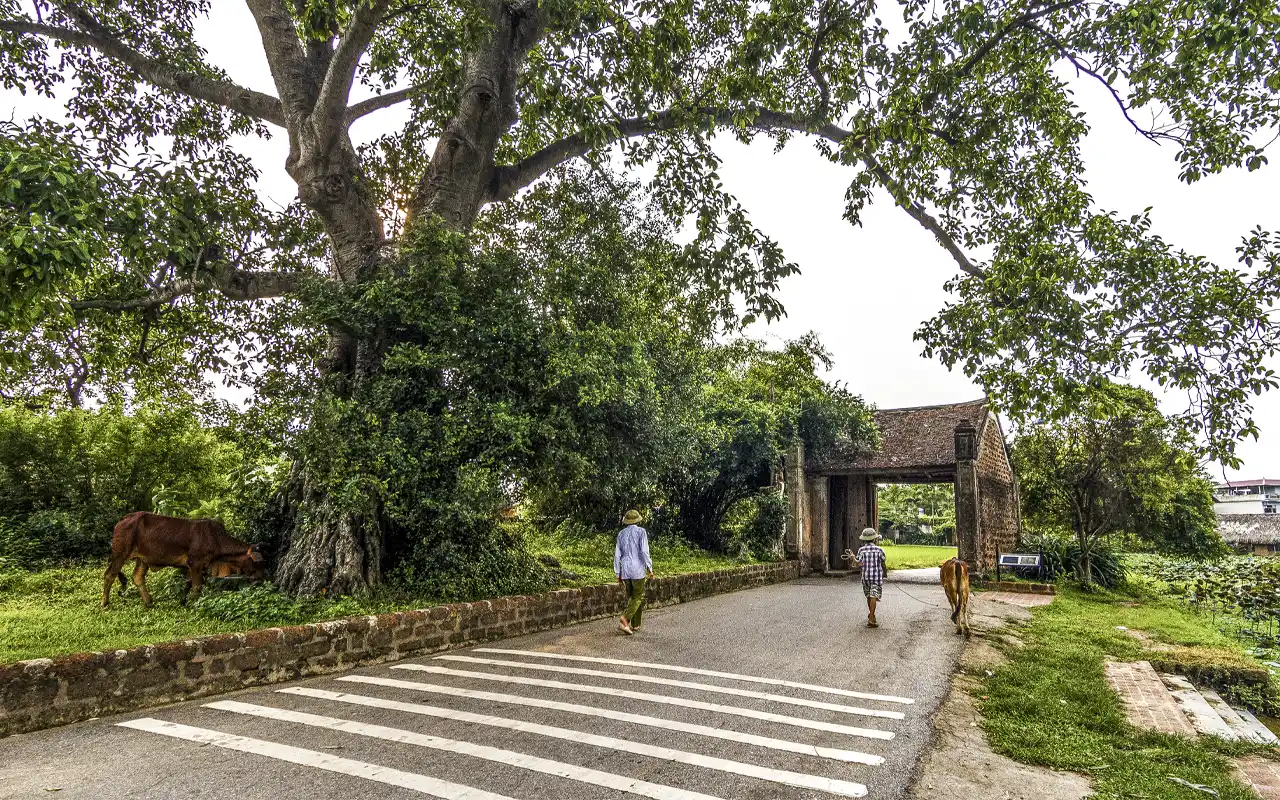
A local resident and a child walk with cows near the historic gate of Duong Lam Ancient Village.
In the Red River Delta, the traditional communal house, known as a đình, illustrates this relationship particularly well. These buildings historically served as places of worship, public gatherings and community administration. Their architecture and decoration often reflect local history and beliefs.
Respect for social relationships is also apparent in the Vietnamese language, where forms of address frequently depend on relative age, familiarity and family relationships.
Although urbanisation and changing lifestyles have transformed many aspects of community life, relationships between families, neighbours and generations continue to influence contemporary Vietnamese society.
Cultural Exchange and Adaptation
Vietnam’s location in Southeast Asia has encouraged cultural exchange throughout its history. Chinese philosophical traditions, Buddhist teachings, Indian religious influences, maritime trade and European colonialism have all contributed to the country’s cultural development in different ways.
These influences have not simply replaced existing Vietnamese traditions. Communities have interpreted, adapted and combined them with local knowledge and beliefs.
Hoi An’s architecture, the religious monuments of the former Champa kingdom and Hanoi’s colonial-era buildings illustrate different periods of cultural interaction. Contemporary Vietnamese art, fashion, architecture and cuisine continue this process of adaptation.
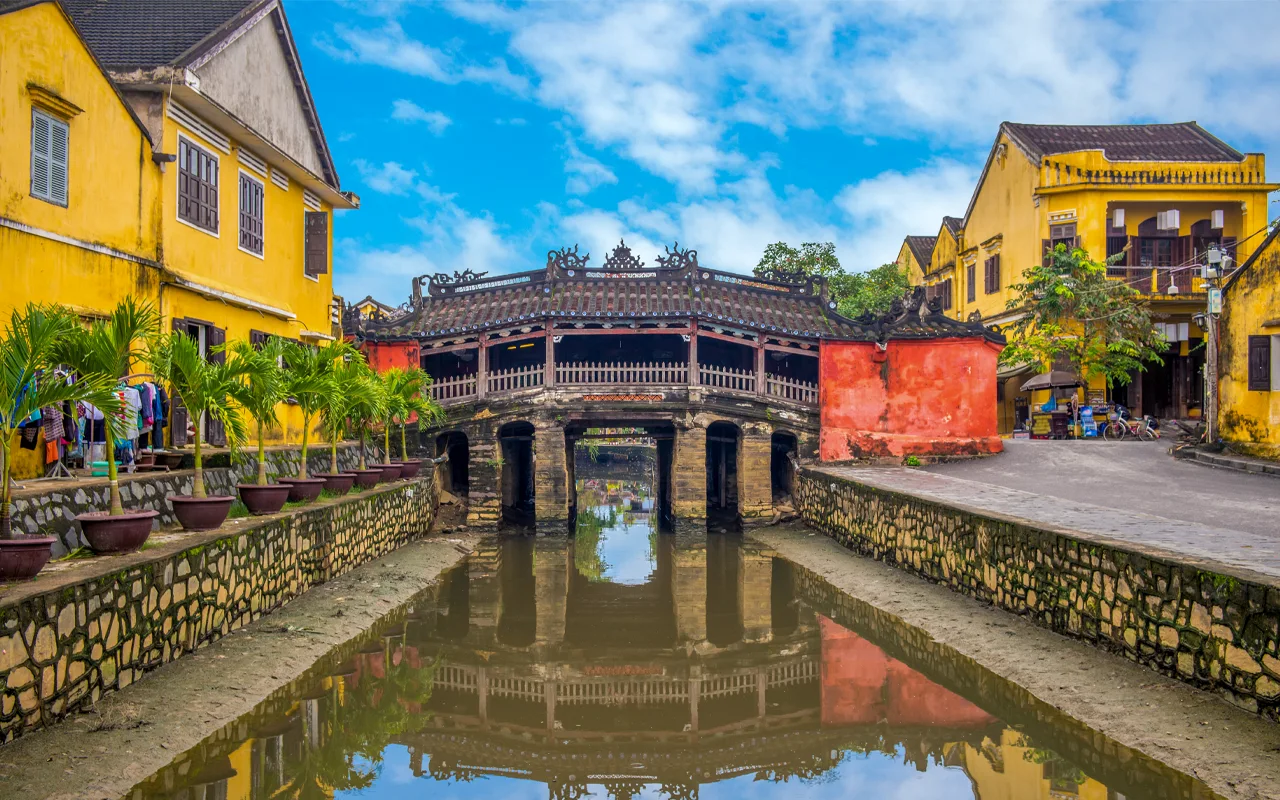
The historic Japanese Covered Bridge is a landmark located in the ancient town of Hoi An.
Vietnamese traditional culture should therefore be understood as a living and evolving identity rather than a fixed collection of historical customs.
The Cultural Geography of Vietnam
Vietnam’s cultural heritage is closely connected with its geography. From the mountainous northern regions to the central coastline and the agricultural landscapes of the Mekong Delta, different environments have shaped distinctive cultural practices.
Northern Vietnam: Historical Memory and Mountain Communities
Hanoi occupies an important place in Vietnam’s political, intellectual and cultural history. The Imperial Citadel of Thang Long, the Temple of Literature and the city’s historic neighbourhoods offer contrasting perspectives on the development of the Vietnamese state, education and urban life.
The UNESCO-listed Imperial Citadel preserves archaeological and architectural evidence of successive periods of Vietnamese history. Its significance lies not simply in the surviving structures but in the continuity of political and cultural life associated with the site.
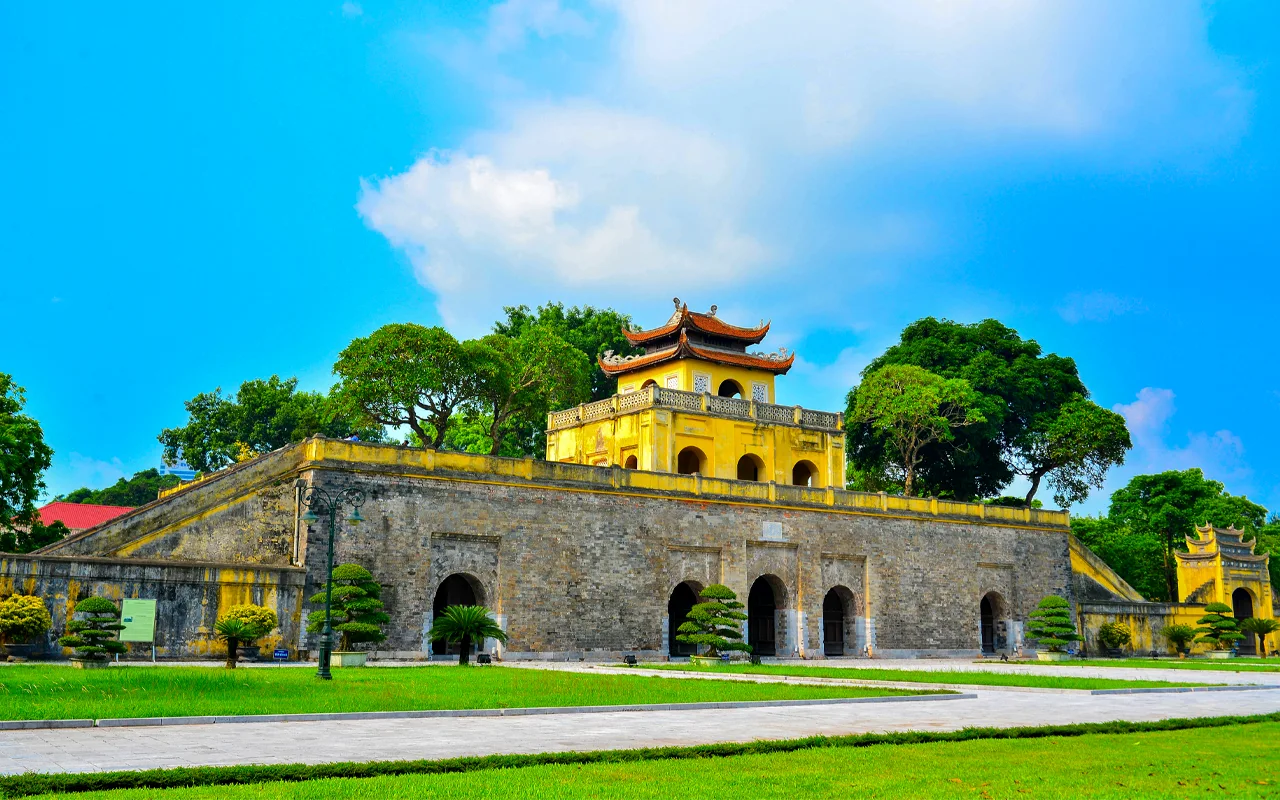
The historic Doan Mon gate stands within the Imperial Citadel of Thang Long in Hanoi.
Outside Hanoi, the Red River Delta contains villages associated with ceramics, silk weaving, folk painting, woodcarving and traditional performing arts. These communities illustrate the historical relationship between agriculture, specialised craftsmanship and local commerce.
Further north, mountainous regions are home to communities including the Hmong, Dao and Tai peoples. Textile traditions, agricultural knowledge, languages and architectural practices differ considerably between communities.
In destinations such as Sapa and Mai Chau, cultural travel can offer opportunities to understand these differences through locally guided visits and community-based experiences.
Central Vietnam: Imperial Culture and Maritime Exchange
Central Vietnam preserves evidence of several important chapters in Southeast Asian history.
Hue, the imperial capital of the Nguyen Dynasty from 1802 to 1945, developed a distinctive cultural identity shaped by court traditions, ceremonial architecture, music and scholarly life. Its palaces, royal tombs and religious buildings provide insight into the organisation and artistic achievements of Vietnam’s last imperial dynasty.
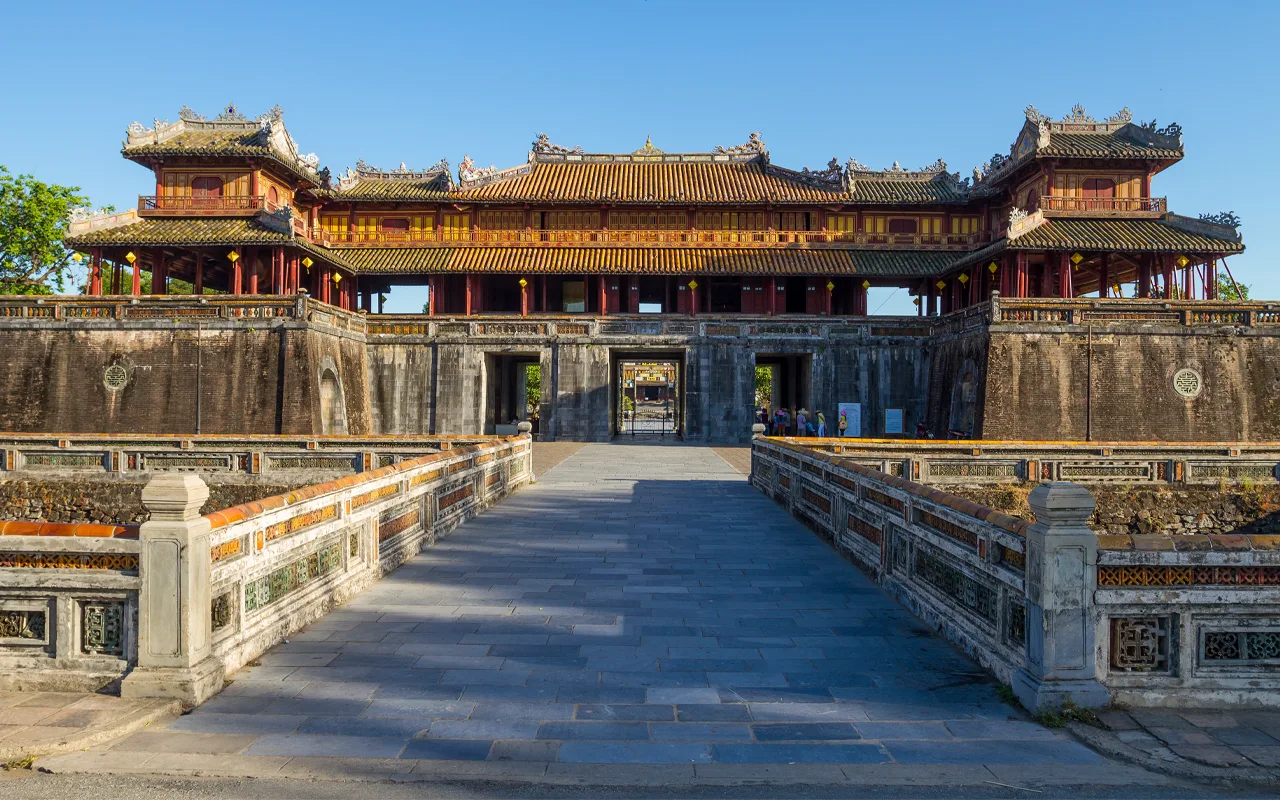
The historic Meridian Gate serves as the main entrance to the Imperial City in Hue.
Hoi An presents a different historical perspective. As an international trading port, it developed through exchanges between merchants and communities from different parts of Asia and beyond. Its assembly halls, merchant residences and religious buildings preserve evidence of these relationships.
Nearby, My Son Sanctuary reflects the architectural and religious achievements of the former Champa kingdom, whose cultural development was influenced by maritime connections and Hindu religious traditions.
The Central Highlands add another dimension to this regional diversity. Gong traditions among several ethnic communities demonstrate how music can express spiritual beliefs, social relationships and connections with the natural environment.
Southern Vietnam: River Cultures and Religious Diversity
The waterways of the Mekong Delta have historically influenced transportation, agriculture, trade and patterns of settlement. Floating markets, riverside communities and agricultural traditions reflect the relationship between local livelihoods and the surrounding environment.
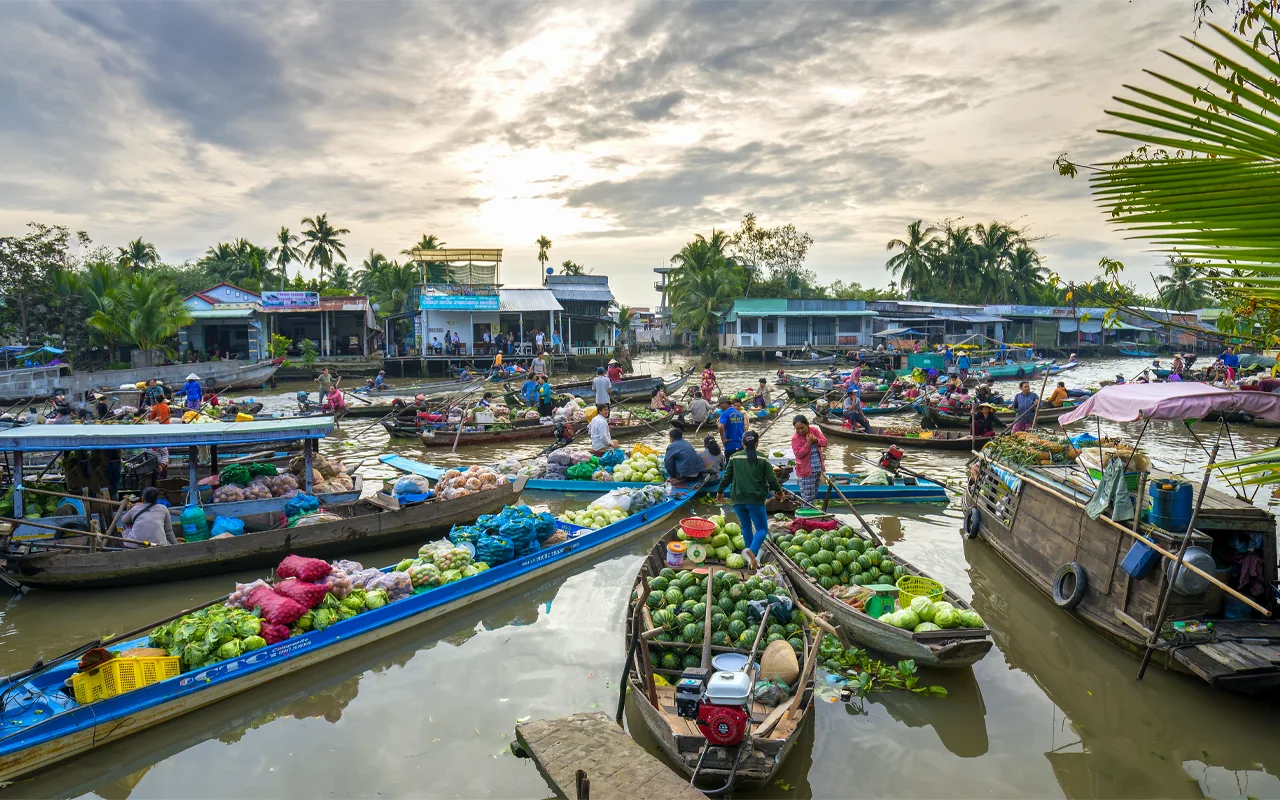
Vendors sell fresh produce from wooden boats at the bustling Cai Rang Floating Market in Mekong Delta.
Southern Vietnam’s cultural identity has also been shaped by Vietnamese, Khmer, Chinese and Cham communities, among others.
Khmer Buddhist pagodas in the Mekong Delta preserve distinctive religious and architectural traditions, while Chinese assembly halls and Cham Muslim communities illustrate other dimensions of the region’s cultural history.
Music provides another important expression of southern Vietnamese identity. The tradition of đờn ca tài tử, combining instrumental music and singing, reflects both scholarly and folk influences. It is recognised by UNESCO as intangible cultural heritage.
Exploring southern Vietnam through its communities, religious buildings, markets and musical traditions reveals a region whose cultural identity is inseparable from historical migration, trade and environmental adaptation.
Living Heritage: Culture Beyond Historic Monuments
When people think about cultural heritage, they often imagine ancient temples, archaeological sites and historic buildings. These places are important, but some of Vietnam’s most meaningful traditions exist through knowledge, performance and everyday practice.
UNESCO distinguishes between tangible heritage, which includes physical monuments and objects, and intangible cultural heritage, which encompasses practices, expressions, knowledge and skills recognised by communities as part of their cultural inheritance.
Vietnam offers numerous examples of how these two forms of heritage coexist.
Traditional Music and Performing Arts
Quan họ folk singing from the Bac Ninh region reflects traditions of social exchange and musical dialogue. Hue’s nhã nhạc, or royal court music, preserves musical practices associated with imperial ceremonies. Southern đờn ca tài tử continues a different tradition of musical expression rooted in regional social life.
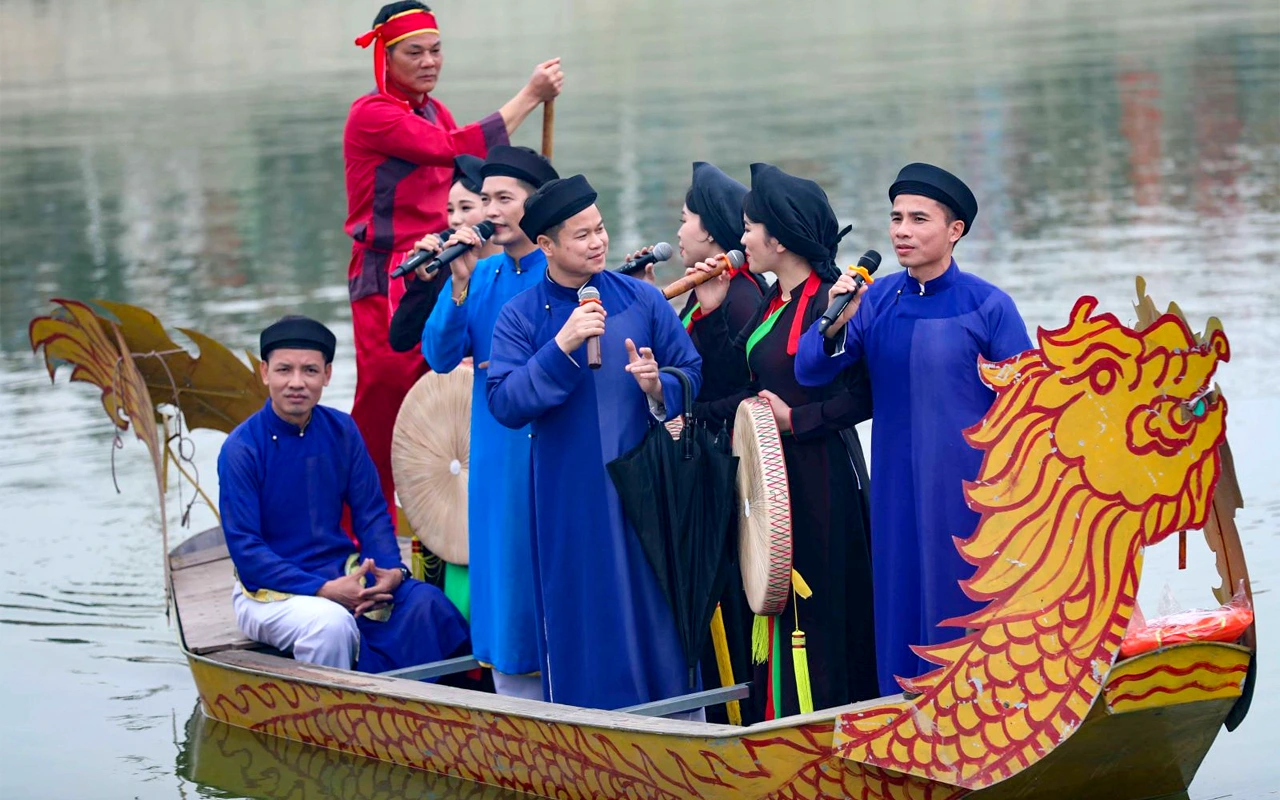
Performers in traditional clothing sing Quan ho folk songs on a dragon boat in Bac Ninh.
All three appear on UNESCO’s intangible cultural heritage lists, alongside other Vietnamese traditions such as the gong culture of the Central Highlands and the Xoe dance of the Tai people.
Water puppetry provides another example of living artistic heritage. Developed in northern Vietnam, this performance tradition uses wooden puppets moving across a water-filled stage to portray stories associated with rural life, folklore and popular entertainment.
These art forms depend on more than the preservation of instruments, costumes or performance spaces. Their survival requires practitioners who understand the traditions and opportunities for younger generations to learn them.
Craftsmanship and Cultural Knowledge
Traditional craftsmanship preserves knowledge accumulated through generations of working with local materials and refining specialised techniques.
In Bat Trang near Hanoi, ceramic production connects artistic design with knowledge of clay, glazing and firing. Silk weaving in Van Phuc reflects the relationship between textile skills, commerce and changing preferences in clothing. Dong Ho folk painting demonstrates how visual art can express popular beliefs, humour and social commentary.
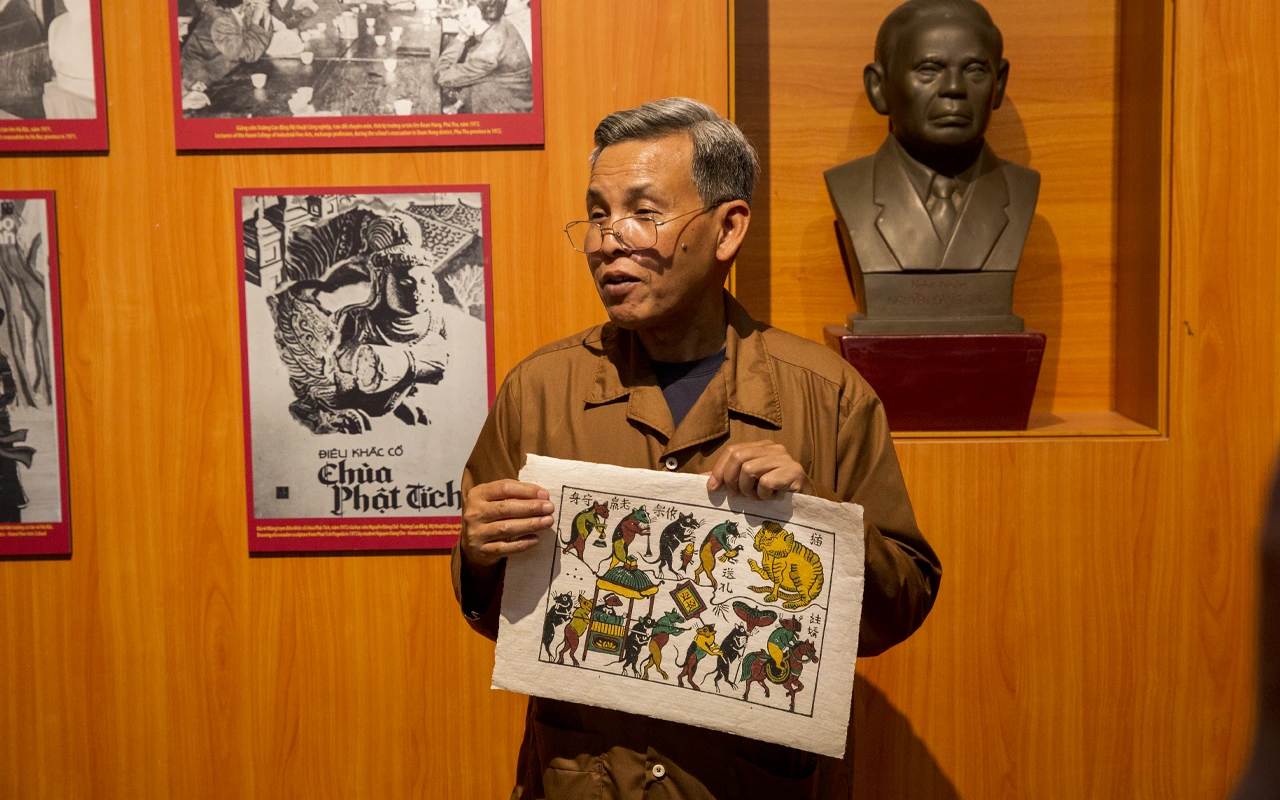
An artisan displays a traditional Dong Ho folk painting depicting a mouse wedding scene.
Elsewhere, lantern making, lacquerwork, embroidery, bamboo weaving and other crafts reflect different regional histories and artistic traditions.
The cultural importance of these activities lies not only in the finished products but also in the techniques, experience and creative judgement required to produce them.
Festivals, Rituals and Collective Memory
Traditional Vietnamese festivals help maintain connections between communities and their cultural histories.
Tet brings together traditions of family reunion, ancestral remembrance and renewal. Hung Kings Commemoration Day honours the legendary founders of the Vietnamese nation, while village festivals may celebrate local guardian deities, historical figures or agricultural traditions.
Regional celebrations provide additional insight into Vietnam’s diversity. The Kate Festival of Cham communities and the Ooc Om Boc Festival associated with Khmer communities in southern Vietnam reflect different religious and cultural backgrounds.
Unlike Vietnam National Culture Day, many traditional festivals follow lunar or community-specific calendars. Their meanings and ceremonial practices also differ according to local beliefs and histories.
Together, these celebrations demonstrate that heritage is not simply something preserved in museums. It is maintained through participation and the relationships that give cultural practices their meaning.
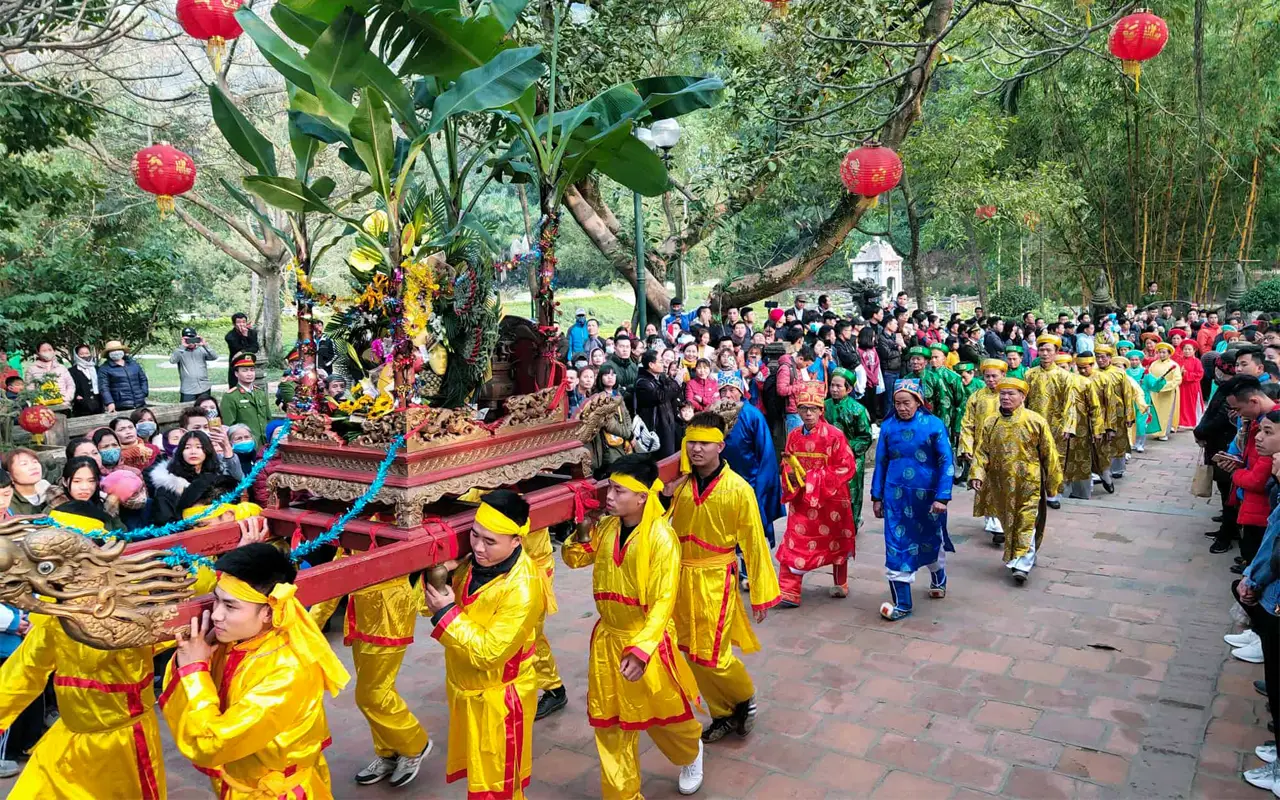
Participants in traditional attire carry a decorated palanquin during the annual Giong Festival in Vietnam.
Why Cultural Preservation Matters in Contemporary Vietnam
Vietnam’s economic development, urban expansion and increasing international connections have created new opportunities for cultural expression. They have also introduced challenges for the preservation of traditional knowledge and historic environments.
Historic neighbourhoods may experience pressure from new construction and commercial development. Traditional craft workshops can face competition from industrially produced goods. Young people may pursue careers that offer different opportunities from those available within family-based occupations.
Preserving cultural heritage requires more than protecting old buildings or organising occasional performances. It involves creating conditions in which cultural knowledge remains relevant and its practitioners can sustain meaningful livelihoods.
For traditional crafts, this might involve supporting apprenticeships, developing contemporary applications for established techniques or helping artisans reach new markets. For performing arts, it may mean providing opportunities for teaching, rehearsing and performing within the communities where these traditions developed.
Historic places present their own challenges. Conservation must consider not only architectural authenticity but also the needs of residents, environmental pressures and the long-term effects of tourism.
Hoi An illustrates why this balance matters. Its historic buildings are internationally recognised, yet its cultural significance is also connected with the lives of residents and the activities taking place within the town.
The purpose of cultural preservation is not to prevent change. Rather, it is to ensure that development does not unnecessarily erase the knowledge, identities and historical connections that communities value.
Cultural Heritage as a Meaningful Travel Experience
Cultural tourism in Vietnam offers opportunities to understand the country’s history through its places, people and continuing traditions.
The most rewarding cultural experiences often emerge when travellers have sufficient time to explore the context behind what they encounter.
Reading History Through Architecture
Visiting Hanoi, Hue and Hoi An reveals three contrasting perspectives on Vietnam’s historical development.
Hanoi’s imperial and educational institutions reflect the evolution of political authority and intellectual life. Hue’s ceremonial architecture expresses the organisation and cultural ambitions of an imperial court. Hoi An’s merchant residences and assembly halls demonstrate the influence of international commerce.
Understanding the purposes of these buildings, rather than simply appreciating their appearance, helps connect architectural heritage with wider social and historical developments.
Learning From Artisans and Local Communities
A visit to a traditional craft workshop can reveal the relationship between cultural knowledge and everyday livelihoods.
Watching a potter shape clay, learning about textile dyeing or discussing the decorative techniques used in lacquerwork introduces dimensions of heritage that are difficult to appreciate through a museum display alone.
Community-based experiences in northern Vietnam and other rural regions can offer similar opportunities to learn about local agriculture, architecture, food traditions and environmental knowledge.
The value of these experiences depends considerably on how they are organised. Encounters that allow local participants to explain their traditions in their own terms generally offer a more meaningful understanding than visits designed solely around staged entertainment.
Discovering Culture Through Regional Cuisine
Vietnamese cuisine provides a particularly accessible introduction to the relationship between geography and cultural identity.
Northern dishes, Hue’s culinary traditions, the food of historic trading communities and the produce of the Mekong Delta reflect different agricultural environments, historical influences and local preferences.
Markets, cooking classes and shared meals can introduce travellers to ingredients, preparation methods and social customs. They also offer opportunities to understand how food connects family relationships, religious practices, seasonal celebrations and regional identity.
Through cuisine, cultural heritage becomes part of an everyday experience rather than something encountered only at a designated historical attraction.
Responsible Tourism and the Future of Vietnamese Heritage
Tourism can contribute to cultural preservation by generating income for artisans, supporting conservation and creating opportunities for communities to share their knowledge. These benefits, however, are not automatic.
When tourism places excessive pressure on historic neighbourhoods or encourages traditions to be adapted primarily for commercial entertainment, it can undermine some of the cultural qualities that initially attracted visitors.
Responsible tourism in Vietnam begins with recognising that communities are the custodians of their own heritage. They should have a meaningful role in determining how cultural experiences are presented, what knowledge is shared and how tourism benefits are distributed.
Travellers can contribute positively through relatively straightforward choices:
- Choose locally guided experiences that encourage dialogue and cultural understanding.
- Purchase traditional handicrafts from artisans or businesses that can explain the origin and production of their goods.
- Ask permission before photographing people, private homes or religious ceremonies.
- Respect local customs, dress requirements and restrictions at sacred sites.
- Support community-based accommodation and experiences where local residents participate in their organisation.
- Allow sufficient time in each destination rather than treating cultural encounters as brief sightseeing stops.
These approaches can improve the quality of a journey while respecting the communities whose traditions make cultural travel possible.
Experiencing Vietnam National Culture Day as an International Visitor
Travellers visiting Vietnam around November 24 may find opportunities to attend cultural exhibitions, performances, heritage activities and public celebrations.
Hanoi holds particular historical significance because of its association with the First National Cultural Conference. Other destinations may organise activities highlighting regional traditions, local craftsmanship, performing arts or community heritage.
Vietnam National Culture Day is a paid public holiday, so visitors should check attraction opening hours, transport arrangements and local event programmes when planning their day. Admission arrangements may vary between cultural institutions.
However, meaningful encounters with Vietnamese culture are not limited to a particular date. Heritage sites, traditional workshops, regional cuisine, religious architecture and community traditions provide opportunities for cultural discovery throughout the year.
For travellers interested in Southeast Asian history and heritage, combining Vietnam’s major cultural centres with time in smaller communities offers a particularly rewarding perspective on the country’s diversity.
A Celebration of Vietnam’s Past, Present and Future
Vietnam National Culture Day reflects an understanding that culture is fundamental to the identity and development of a society. It connects historical memory with contemporary life and encourages reflection on the knowledge, traditions and creative achievements that future generations will inherit.
Vietnamese cultural heritage cannot be contained within a collection of monuments, museum exhibits or annual celebrations. It exists in the languages people speak, the stories families remember, the skills artisans practise and the relationships communities maintain.
For international travellers, this perspective offers a more thoughtful way to discover Vietnam. Its historic cities, rural landscapes, religious traditions and artistic heritage become connected through the experiences of the people who sustain them.
Understanding these connections is one of the most meaningful ways to understand Vietnam itself: a country whose cultural identity continues to develop while remaining deeply connected to its history.
Share This Post





















Welcome to Asia Travel & Leisure, your premier Southeast Asia DMC specializing in authentic B2B travel experiences across Vietnam, Laos, Cambodia, Myanmar, and Thailand.


