

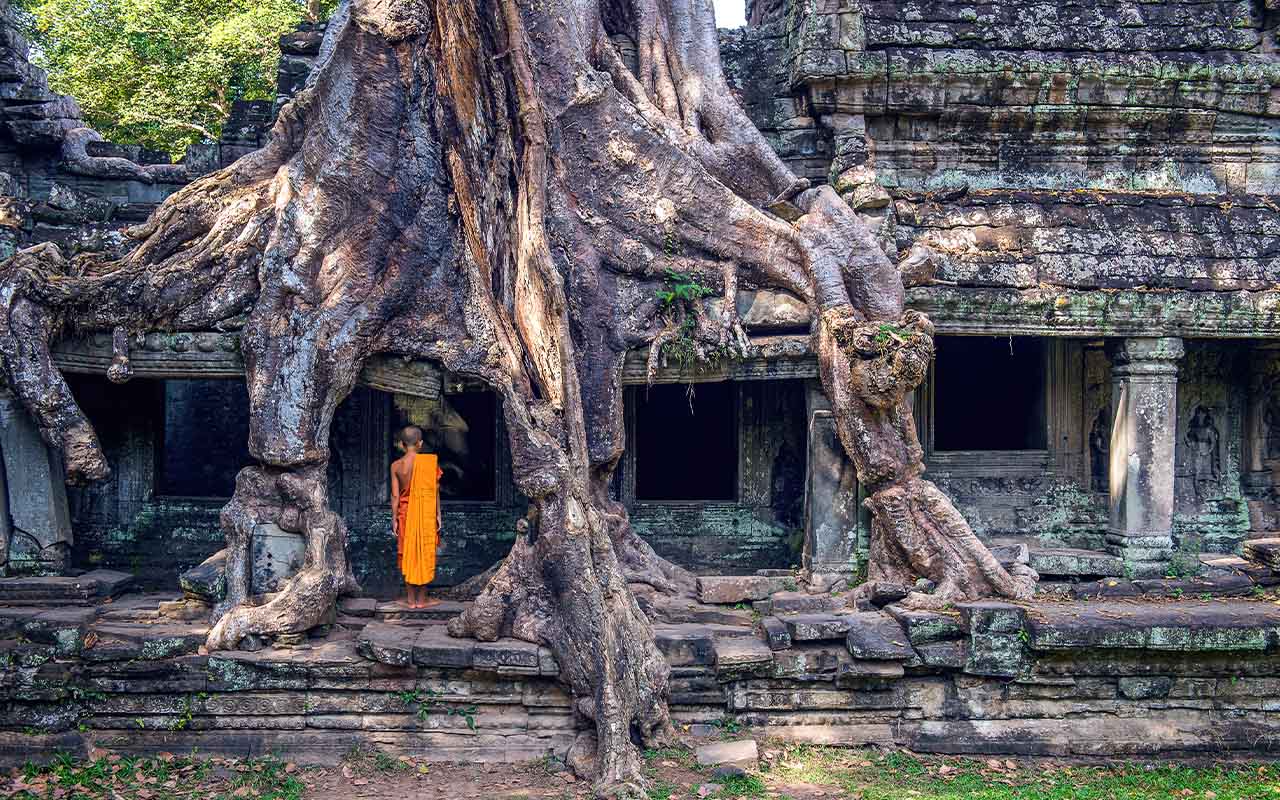
 Nestled within the lush jungles of Cambodia lies Ta Prohm Temple, a temple frozen in time. Its crumbling walls intertwine with massive tree roots, creating an otherworldly scene. In this article, we delve into the captivating history, intricate carvings, and spiritual essence of Ta Prohm.
Ta Prohm is built in the Bayon style largely in the late 12th and early 13th centuries and originally called Rajavihara. Located approximately one kilometer east of Angkor Thom and on the southern edge of the East Baray, it was founded by the Khmer King Jayavarman VII as a Mahayana Buddhist monastery and university.
| Key Takeaways | |
|---|---|
| Significance | * Originally a Buddhist monastery and center of learning * Dedicated to the mother of King Jayavarman VII * One of the few temples with an inscription detailing its inhabitants (almost 80,000 people) |
| Worth Visiting? | Yes, for its unique atmosphere, tree-covered ruins, and glimpse into the past |
| Oppenning Hours | 7:30 AM–5:30 PM |
| Movie Filmed There (Featured Movie) | Lara Croft: Tomb Raider (2001) |
| Tree Species | Silk-cotton and strangler fig trees |
| Construction Date | Late 12th century and early 13th century. Opened in 1186 |
| Location | Near Siem Reap, Cambodia, approximately one kilometre east of Angkor Thom |
| Discovery | Not truly “discovered” as it was always there. However, it was rediscovered by French archaeologists in the early 20th century along with other Angkor temples |
| Construction & Power | The grand scale and beauty of Ta Prohm helped to demonstrate the king’s power and wealth |
| Age of Trees at Ta Prohm | Unknown, but likely established themselves over a long period after the temple’s abandonment |
| Age of Ta Prohm Temple | Over 800 years old |
| Visitting and Cost | Entrance fee is covered by the Angkor Wat complex ticket. (As part of the Angkor Wat complex ticket) |
| Time to Spend at Ta Prohm | 1-2 hours |
| Part of Angkor Thom | No, it’s about 1 kilometer east of Angkor Thom |
The Origins of Ta Prohm Temple
The origins of Ta Prohm Temple are as fascinating as the temple complex itself. Nestled within the lush jungles of Cambodia, Ta Prohm was established in the late 12th and early 13th centuries, during a period of prolific temple building under the reign of the great Khmer King Jayavarman VII. It was originally known as Rajavihara, which translates to “the royal monastery,” and was dedicated as a Mahayana Buddhist monastery and university.
The temple’s design follows the distinctive Bayon style, characterized by its intricate bas-reliefs and massive stone faces. Unlike many other temples in the Angkor region, Ta Prohm was left largely untouched by archaeologists and restorers. This decision was made to preserve its allure as a ‘temple in the jungle’ and to showcase the powerful interplay between nature and architecture. Over the centuries, the massive roots of the silk-cotton and strangler fig trees have slowly enveloped the temple ruins, creating a surreal landscape that captivates all who visit.
Ta Prohm’s dedication was also significant, as it was established in honor of Jayavarman VII’s family. The temple’s stele records that it once housed more than 12,500 people, including 18 high priests and 615 dancers, with an additional 80,000 people in the surrounding villages working to provide services and supplies to the temple community.
Today, Ta Prohm remains a powerful symbol of Cambodia’s cultural heritage and is a must-visit destination for travelers from around the world. Its unique blend of human history and natural beauty continues to inspire awe and wonder, making it a true jewel in the crown of Angkor’s archaeological sites.
Historical and Cultural Significance
Ta Prohm, originally named Rajavihara, is a mesmerizing temple built in the Bayon style predominantly in the late 12th and early 13th centuries. Situated approximately one kilometer east of Angkor Thom and on the southern edge of the East Baray, this temple complex was established by the Khmer King Jayavarman VII as a Mahayana Buddhist monastery and university.
The temple is dedicated to the king’s mother, and its name, Rajavihara, means “Royal Monastery.” Ta Prohm was designed as a place of learning and spirituality, embodying the zenith of Khmer architecture and religious devotion during that era. The intricate carvings and the layout of the temple reflect the architectural brilliance and the religious fervor of the time.
Unique Features and Current State
Unlike most Angkorian temples that have been extensively restored, Ta Prohm has been deliberately left in much the same condition as it was found. This decision was made to preserve the photogenic and atmospheric blend of ancient ruins intertwined with massive tree roots and lush jungle surroundings. This unique state has made Ta Prohm one of the most popular and iconic temples in the Angkor region.
In 1992, UNESCO inscribed Ta Prohm on the World Heritage List, recognizing its historical and cultural significance. Today, it stands as one of the most visited complexes in Cambodia, attracting historians, archaeologists, and tourists from around the globe.
Architectural and Natural Highlights
The architectural marvels of Ta Prohm are a profound testament to the ingenuity and artistry of the Khmer Empire. Here, the ancient stone structures and the sinuous roots of towering trees exist in a symbiotic embrace, creating a visual spectacle that is both haunting and beautiful.
The Symbiosis of Stone and Nature
At Ta Prohm, nature has not merely encroached upon the man-made; it has become an integral part of the architecture itself. The silk-cotton and strangler fig trees have thrust their roots over and through the temple’s walls, their growth guided by the stones and bricks laid down centuries ago. This intertwining of organic and inorganic elements is a rare sight, offering a glimpse into the relentless power of nature and the enduring strength of human construction.
Engineering of an Era
The temple’s layout, with its central sanctuary, libraries, and courtyards, showcases the advanced engineering skills of the Khmer builders. The use of laterite and sandstone, materials that have withstood the test of time and elements, speaks to the builders’ understanding of their environment and resources.
Artistic Mastery
The bas-reliefs and carvings found throughout Ta Prohm are not just decorative elements; they are narratives in stone, telling tales of mythology, everyday life, and the spiritual beliefs of the Khmer people. The precision and detail in these artworks reflect a high level of craftsmanship and an aesthetic sensibility that valued the interplay of light, shadow, and texture.
Preservation and Conservation
The approach to preserving Ta Prohm in a state of ‘arrested decay’ allows visitors to experience the temple much as the early explorers did. It also presents unique challenges for conservationists, who must balance the protection of both the historical structures and the natural elements that have become characteristic of the site.
A Living Monument:
Ta Prohm is more than a static relic of the past; it is a living monument. The sounds of the jungle, the coolness of the stones, and the sight of the majestic trees remind us that history is not just about the moments that have passed but also about the ongoing story of nature and humanity.
The Trees and the Temple: The symbiotic relationship between the temple’s ruins and the jungle, particularly the enormous roots of the Tetrameles nudiflora and Ficus trees enveloping the stone structures, creates a surreal and hauntingly beautiful sight. These trees not only enhance the visual appeal but also symbolize the relentless power of nature over human constructs.
Intricate Carvings and Reliefs: The walls of Ta Prohm are adorned with intricate carvings and bas-reliefs depicting Buddhist mythology and scenes from daily life in the Angkorian era. These carvings provide invaluable insights into the artistic and cultural practices of the time.
In capturing the essence of Ta Prohm, one must consider not only its architectural and artistic merits but also its role as a bridge between the past and the present, between humanity and the natural world. It is this unique combination that makes Ta Prohm an architectural marvel unlike any other.
Visitor Information
Best Time to Visit Ta Prohm: Dawn is one of the most enchanting times to visit Ta Prohm. The ancient sandstone blocks are bathed in the golden hues of the early morning rays, creating a mystical and tranquil atmosphere. An early morning visit also ensures fewer tourists and tour buses, allowing for a more intimate experience with the temple.
Practical Tips:
- Dress Appropriately: As with all temple visits, dress modestly to show respect. Long pants and shirts that cover the shoulders are recommended.
- Guided Tours: Consider hiring a knowledgeable guide to fully appreciate the historical and cultural context of Ta Prohm. Guides can provide detailed explanations and interesting anecdotes that enhance the visit.
- Photography: The interplay of light and shadows in the early morning and late afternoon provides excellent opportunities for photography. Don’t miss capturing the iconic “Tomb Raider Tree” made famous by the movie.
Nearby Attractions: While in the Angkor region, also visit other significant temples such as Angkor Wat, Bayon, and Banteay Kdei. Each temple offers a unique glimpse into the grandeur of the Khmer Empire.
Ta Prohm’s blend of natural beauty and historical significance makes it a must-visit site for anyone interested in archaeology, history, and photography. The preservation approach taken here serves as a poignant reminder of the delicate balance between human achievements and the forces of nature.
Share This Post





















Welcome to Asia Travel & Leisure, your premier Southeast Asia DMC specializing in authentic B2B travel experiences across Vietnam, Laos, Cambodia, Myanmar, and Thailand.


