

The Alms Giving Ceremony is one of the most sacred Buddhist traditions of Laos. In the early morning (around 5.30 AM) Locals start preparing food for the monks, the lay people seek spiritual blessing by way of the monk’s acceptance of their offering. From the oldest to the youngest monks come out of the temple in saffron-robed walking along the streets in single file.
The Ceremony begins with the exit of monks from Wat Mai Temple, located on Sisavangvong street, surrounding streets and later the monks end the ceremony once again returning to the temple Wat Mai.
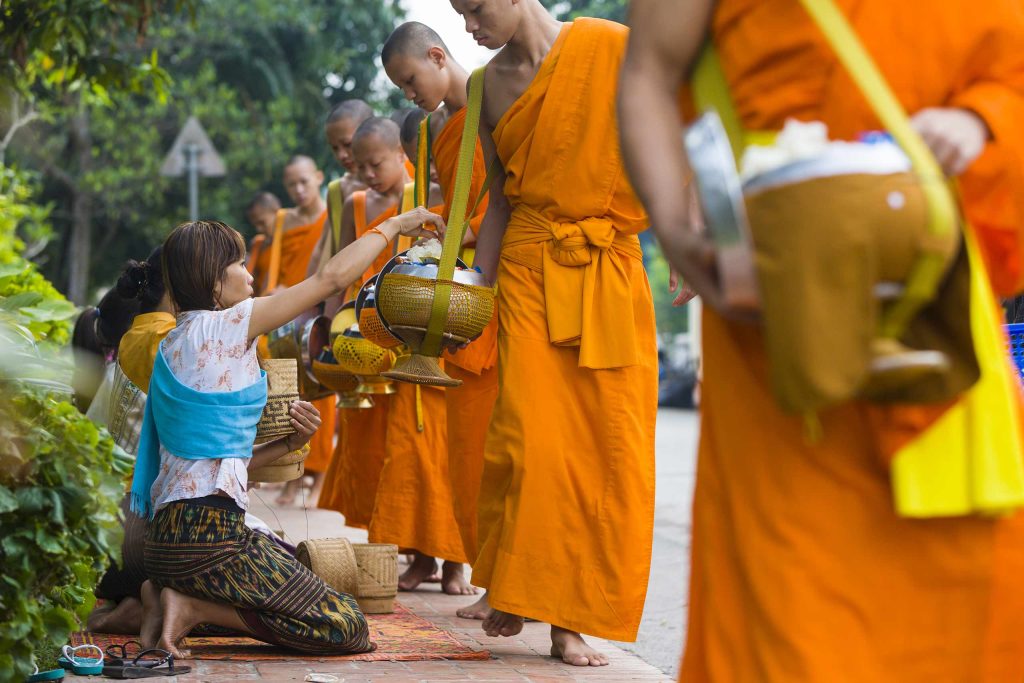
The monks who make up the ritual of the ceremony of alms, pass one by one in front of the devotees and the faithful at the same time, delivered the offerings with their own hands by inserting food inside the metal container that the monks carry. The ritual will be done in silence as the monks walk in a meditative state and the alms givers respect this by not disturbing the monk’s meditation.
The ritual will be done in silence as the monks walk in a meditative state and the alms givers respect this by not disturbing the monk’s meditation.
All food have been delivered in the ceremony of alms will be use during the day.
Note: Please keep silence and dress appropriate, legs and chests should be covered, and don’t taugh the monks.
Highlights:
In the morning of Luang Prabang hundred of Buddhist monks from 33 temple-monasteries depart from their various temples to gather their daily meal. The tradition of alms gathering dates back to the 14th century, yet still today locals wake early to prepare the food for the monks and wait quietly by the roadside to give their gifts. Although the main purpose is for locals to give alms to the monks, you will also notice small children kneeling with baskets in the hope that the monks will share some of their alms with them so that they can take food back to their family.
Take part in the almsgiving ceremony by protecting its dignity and its beauty.
We would like to draw your attention to this religious practice, which has great meaning for the population of Luang Prabang.
Frequently Asked Questions
What Is the Tak Bat / Alms Giving Ceremony?
The Tak Bat (or Sai Bat) is a daily Buddhist ritual of alms giving, most notably practiced in Laos, particularly in Luang Prabang. It's a centuries-old tradition that symbolizes a spiritual relationship between the monastic community and the laypeople.The Ceremony- Every morning at sunrise, barefoot Buddhist monks, clad in their traditional saffron robes, walk in a silent procession through the streets. They carry large metal alms bowls to collect food offerings from devout locals who kneel or sit respectfully by the roadside. The offerings typically consist of sticky rice, fruit, or sweets.
- This ceremony holds deep meaning for both the monks and the givers. For the monks, it's a way to sustain themselves, as they have renounced material possessions and rely on the community for food. For the laypeople, the act of giving is a way to make "merit" or "good karma," which is believed to bring them spiritual redemption and a positive future life.
When and Where It Happens in Luang Prabang?
The Tak Bat ceremony in Luang Prabang happens every morning at dawn. The exact time varies with the seasons, starting earlier in the summer (around 5:30 AM) and a bit later in the winter (around 6:30 AM).The procession takes place throughout the city, with monks leaving from the numerous temples. The most well-known route, and often the most crowded, is along Sakkaline Road and Sisavangvong Road in the historic old town. For a quieter, more authentic experience, it's recommended to observe the ceremony on the smaller, side streets away from the main thoroughfares.Why you should Experience It?
Experiencing the Tak Bat ceremony offers a profound glimpse into a deeply spiritual and ancient tradition. It allows you to:- Witness a sacred ritual: The ceremony is not a performance but a genuine act of faith. Observing the silent procession of monks and the respectful devotion of the locals is a powerful and moving experience.
- Understand Lao culture: The ceremony highlights the symbiotic relationship between the monastic community and the laypeople, which is central to Theravada Buddhism and Lao identity.
- Experience a moment of peace: The quiet, dawn atmosphere of the ceremony provides a stark contrast to the fast pace of modern life, offering a unique opportunity for quiet reflection and mindfulness.
Share This Post





















Welcome to Asia Travel & Leisure, your premier Southeast Asia DMC specializing in authentic B2B travel experiences across Vietnam, Laos, Cambodia, Myanmar, and Thailand.


