

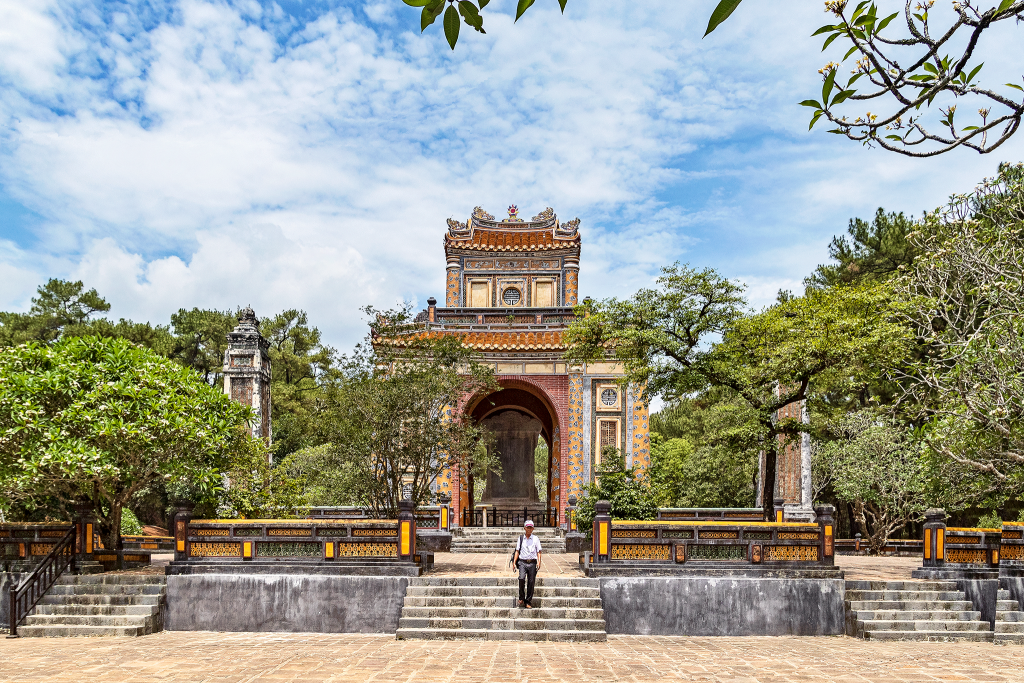
Tu Duc Tomb, one of the most iconic historical sites in Hue, Vietnam, offers a unique glimpse into the opulent past of the Nguyen dynasty. This guide provides an in-depth look at the tomb’s historical background, architectural marvels, and the serene natural landscape that surrounds it. Whether you’re a history enthusiast, architecture lover, or simply looking for a peaceful escape, Tu Duc Tomb has something to offer.
Overview of Tu Duc Tomb
The tomb is divided into two main parts:
The temple area:
Entering Vu Khiem entrance, there is Luu Khiem lake. On the lake are Xung Khiem Pavilion and Du Khiem Pavilion where the Emperor used to come to admire flowers, compose poems, read books, etc.
Then, three Thanh stone steps to Khiem Cung gate lead to Hoa Khiem Palace, which used to be the Emperor’s working place, and is now the altar devoted to the Emperor and the Queen. On both sides are Phap Khiem House and Le Khiem House for the military and civil mandarins.
Behind Hoa Khiem Palace is Luong Khiem Palace, which was also the Emperor’s resting place, and was later used to worship Mrs. Tu Du (Tu Duc’s Mother). On the right of Luong Khiem Palace stand On Khiem Palace, where the royal utensils are kept. On the left of Luong Khiem Palace is Minh Khiem theatre. Then, comes Chi Khiem, the altar to worship the Emperor’s wives, Tri Khiem Palace and Y Khiem Palace were the accommodations of the Emperor’s concubines.
The tomb area:
On the left of the temple is the necropolis itself slopping upward with the Honour Courtyard, the Stele Pavilion, and the seplucre. Rightbehind Bai Dinh (Honour Courtyard), with two rows of magnificent military and civil mandarins, is Bi Dinh (Stele Pavilion) with the biggest stone stele in Vietnam. It is inscribed with Khiem Cung narrative, composed by the Emperor himself, writing about his life and imperial cause as well as his misadventures and diseases, etc. On the hill, opposite the semi-circular Tieu Khiem Tri lake, is the Buu Thanh brick wall, in the middle is a stone house, where the Emperor was buried.
The tomb, enclosed by a wall, is on the other side of a half-noon-shaped lake. It is a drab grey monument, and the emperor was never interred here. The site where his remains were buried (along with great treasure) is not known. To keep it a secret from grave robbers, all of the 200 servants who buried the king were beheaded.
Tu Duc’s Tomb looks like a huge park. The harmonious features of the works can be observed everywhere in the tomb complex. This tomb is a great place to take pictures and feel the cultural history of Hue. The highlight of the grounds is the lotus-filled lake ringed by frangipani trees, with a large pavilion in the center. Minh Khiem Duong, constructed in 1866, is the country’s oldest surviving theater.
Historical Background
Construction and Purpose Tu Duc Tomb was constructed between 1864 and 1867 as the final resting place for Emperor Tu Duc, the fourth ruler of the Nguyen dynasty. Known for his scholarly and poetic nature, Emperor Tu Duc personally oversaw the design and construction of the tomb, blending his refined tastes with the grandeur expected of an imperial burial site. The tomb also served as a second palace where the emperor retreated for rest and contemplation during his lifetime.
Significant Events and Anecdotes Emperor Tu Duc’s reign was marked by internal strife and external threats, including French colonial expansion. Despite these challenges, he left a lasting legacy through his contributions to Vietnamese literature and culture. The inscriptions on the stele at the tomb, written by the emperor himself, offer a rare and personal glimpse into his thoughts and reflections.
Architectural Highlights
Key Structures
- Hoa Khiem Temple: Originally used as the emperor’s residence and office, this temple now serves as an altar dedicated to Tu Duc and his empress. The intricate carvings and ornate decorations reflect the emperor’s sophisticated taste.
- Stele Pavilion: Home to the largest stone stele in Vietnam, this pavilion is inscribed with the autobiography of Emperor Tu Duc. The stele, weighing over 20 tons, is a remarkable example of Nguyen-era stone carving and calligraphy.
- Xung Khiem Pavilion: This lakeside pavilion was a place where the emperor wrote poetry and entertained guests. Its picturesque setting and elegant design make it one of the tomb’s most charming spots.
Unique Architectural Features and Artistry Tu Duc Tomb is a masterpiece of traditional Vietnamese architecture, characterized by its harmonious blend of nature and built structures. The complex is adorned with intricate carvings, beautiful murals, and delicate woodwork. The layout of the tomb, with its winding paths, serene lakes, and lush gardens, reflects the emperor’s desire for tranquility and introspection.
Natural Landscape
Luu Khiem Lake and Surrounding Gardens The tomb’s natural landscape is dominated by Luu Khiem Lake, a large, serene body of water surrounded by gardens and pine forests. The lake, along with the meticulously designed gardens, enhances the tomb’s peaceful atmosphere and provides a beautiful contrast to the ornate buildings. Visitors can stroll along the shaded paths, enjoy the reflection of the pavilions in the water, and appreciate the carefully curated plantings.
Importance of Nature in the Tomb’s Design The integration of natural elements into the tomb’s design was intended to create a serene and contemplative environment. This emphasis on nature is not only aesthetically pleasing but also reflects traditional Vietnamese beliefs about harmony between humans and the natural world. The tranquil setting was meant to provide Emperor Tu Duc with a peaceful place for rest and reflection, both in life and in death.
Visitor Information
Practical Details
- Opening Hours: Tu Duc Tomb is open daily from 7:00 AM to 5:30 PM.
- Ticket Prices: The admission fee is VND 100,000 for adults, with discounts available for children and students.
- Accessibility: The tomb is accessible to most visitors, though some areas may be challenging for those with mobility issues due to the uneven terrain and steps.
Best Times to Visit To avoid the heat and crowds, the best times to visit Tu Duc Tomb are early in the morning or late in the afternoon. The tomb is particularly beautiful during the spring and autumn months when the weather is mild and the gardens are in full bloom.
Tips for an Optimal Experience
- Dress Comfortably: Wear comfortable clothing and walking shoes, as the tomb complex is extensive and requires a fair amount of walking.
- Stay Hydrated: Bring water, especially if visiting during the hotter months.
- Photography: Respect the site and its visitors by being mindful of where and how you take photos. Certain areas may have restrictions on photography.
Tu Duc Tomb is a testament to the rich cultural heritage of Vietnam. Its blend of historical significance, architectural beauty, and serene natural surroundings make it a must-visit destination for anyone traveling to Hue. Whether you’re exploring the intricately decorated pavilions, reflecting by the tranquil lake, or simply soaking in the peaceful ambiance, Tu Duc Tomb offers a unique and enriching experience.
Share This Post



















Welcome to Asia Travel & Leisure, your premier Southeast Asia DMC specializing in authentic B2B travel experiences across Vietnam, Laos, Cambodia, Myanmar, and Thailand.


