

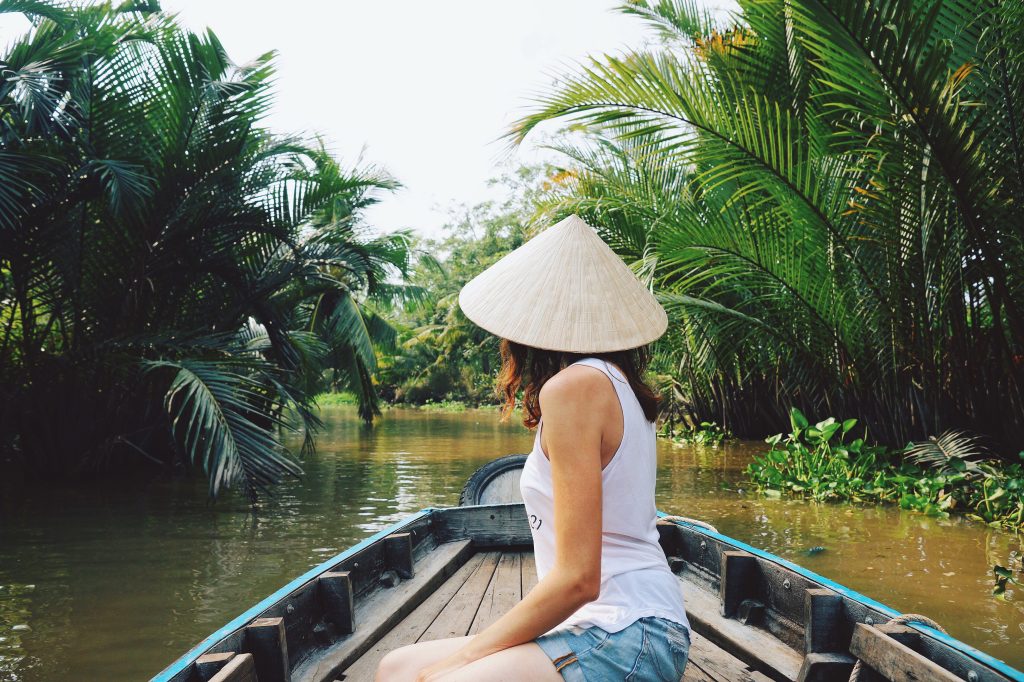
The Mekong Delta (Vietnamese: Đồng bằng Sông Cửu Long “Nine Dragon river delta”) is the region in southwestern Vietnam where the Mekong River approaches and empties into the sea through a network of distributaries. The Mekong delta region encompasses a large portion of southwestern Vietnam of 39,000 square kilometres (15,000 sq mi). The size of the area covered by water depends on the season. It has recently been dubbed as a “biological treasure trove”.
Over 10,000 new species have been discovered in previously unexplored areas of Mekong Delta, including a species of rat thought to be extinct.
The Mekong Delta lies immediately to the west of Ho Chi Minh City (also called Saigon by locals), roughly forming a triangle stretching from Mỹ Tho in the east to Châu Đốc and Hà Tiên in the northwest, down to Cà Mau and the South China Sea at the southernmost tip of Vietnam, and including the island of Phú Quốc.
Vietnam’s ‘rice basket’, the Mekong Delta is a watery landscape of green fields and sleepy villages, everywhere crisscrossed by the brown canals and rivulets fed by the mighty Mekong River. Its inhabitants – stereotyped as friendly and easygoing – have long toiled on the life-sustaining river, with their labours marked by the same cycles governing the waterways.
The delta, which yields enough rice to feed the country with a sizable surplus, was formed by sediment deposited by the Mekong. The process continues today, with silt deposits extending the shoreline by as much as 80m per year. The river is so large that it has two daily tides. Lush with rice paddies and fish farms, this delta plain also nourishes the cultivation of sugarcane, fruit, coconut and shrimp. Although the area is primarily rural, it is one of the most densely populated regions in Vietnam and nearly every hectare is intensively farmed.
Can Tho: The largest city in the region and the political, economic, cultural and transportation center of the Mekong Delta. It is also famous for 2 floating markets: Cai Rang floating market and Phong Dien floating market.
Vinh Long Province with Cai Be floating market: Wholesalers on big boats moor here, each specializing in just a few types of fruit or vegetable, hanging samples of their goods from tall wooden poles. A notable sight is the huge and photogenic Catholic cathedral on the riverside.
My Tho: is the capital of Tien Giang province and an important market town – although for the famous floating markets, you’ll need to continue on to Can Tho. Just about 70km from Ho Chi Minh City so it is a popular day-trip destination for those who want a taste of river life – a flotilla of boats tours the local islands and their cottage industries daily. The economy is based on tourism, fishing and the cultivation of rice, coconuts, bananas, mangoes, longans and citrus fruit. The riverfront makes for a pleasant stroll and the town is easily explored on foot.
Ben Tre: is the capital of eponymous Ben Tre Province in southern Vietnam. Although only a 20 min ferry-ride away from bustling My Tho, this seems to be barrier enough to give the town a genuine backwater feeling. Tourists are still a scarce species and locals are open and friendly. There are no real sights in their own right, but you could have a look at the unspoiled market or visit the rice wine factory on the south bank, 0.5 km west from the old bridge. You can also visit the inevitable coconut candy factory here. It’s a must if you haven’t been to one yet, since in this “factory” basically everything is done by hand.
Tra Vinh: Boasting more than 140 Khmer pagodas scattered about the province, Tra Vinh is a quiet place for exploring the Mekong’s little-touted Cambodian connection. The town itself sees minimal tourist traffic, owing to its somewhat isolated location on a peninsula.
Chau Doc: Drapped along the banks of Hau Giang River, Chau Doc witness alot of travellers passing through on the river route between Vietnam and Cambodia. There are many famous sightseeing in Chau Doc such as: Sam Mountain, temple of Lady Xu, Tra Su forest…
Top Experiences in Mekong Delta
The Mekong Delta offers a variety of unique and engaging experiences. Top highlights include exploring bustling floating markets like Cai Rang, taking scenic boat trips through canals, visiting ancient temples and historical houses, and immersing in the vibrant local culture through food tours and homestays.
- Floating Markets (Cai Rang & Phong Dien) Witness daily life unfold on the water at Cai Rang and Phong Dien—the Mekong’s most iconic floating markets. Boats brimming with fruits, vegetables, and local snacks create a vibrant, authentic trading scene.
- Sampan Boat Rides Through Canals Glide quietly along palm-shaded canals on a traditional sampan boat. It’s the best way to explore the peaceful countryside and observe riverside life up close.
- Visits to Coconut Farms & Handicraft Villages Stop by coconut candy workshops, rice paper houses, and traditional brick kilns. Learn how locals turn natural resources into everyday products.
- Local Homestays & Cycling Tours Stay overnight in a rural village to experience Mekong hospitality. Early morning bike rides through rice fields and orchard paths offer a glimpse into slow-paced delta life.
- Local Culture: Engage with locals by visiting noodle-making factories, rice paper workshops, or staying at a homestay to experience authentic Mekong Delta life.
- Historical Sites: Explore ancient temples like Vinh Trang Temple, and historical houses such as Binh Thuy Ancient House, showcasing the region’s rich history and architectural styles.
- Nature & Wildlife: Discover the biodiversity of Tram Chim National Park, home to various bird species, or explore the Tra Su Cajuput Forest, known for its unique floating forest landscape.
- Food Experiences: Indulge in local specialties like fresh fruits, coconut candy, and other Mekong Delta delicacies. Consider taking a cooking class or food tour to learn about the region’s cuisine.
Other Attractions
- Ninh Kieu Wharf: A picturesque waterfront promenade in Can Tho, perfect for leisurely strolls and enjoying sunset views.
- Sa Dec Flower Village: A charming town known for its beautiful flower gardens and bonsai displays, especially vibrant during Tet (Vietnamese New Year).
- Ben Tre: Known as the “coconut capital” of Vietnam, offering a glimpse into coconut processing and a slower pace of life.
- Sam Mountain: Offers panoramic views of the surrounding landscape and is home to several temples and pagodas.
Best Time to Visit Mekong Delta
The dry season (December to April) is ideal for boat tours and outdoor activities—sunny days, calm waters, and clear skies. The wet season (May to November) transforms the region into a lush, green landscape. While occasional rain is expected, this season offers fewer crowds and vibrant scenery.
Travel advisory
- There are many recommended tours for visiting Mekong delta. If you have limit time, you can take a day trip like: My Tho day trip, Ben Tre day trip or Mekong delta with Cai Be floating market day trip…
- Having more time, you can visit either My Tho, Ben Tre or Cai Be for the first day and then stay ovenight in Can Tho. Next day, visit Cai Rang floating market – the biggest floating market in Mekong Delta.
- For someone like biking tour, you can take this tour: https://www.travelvietnam.com/vietnam-tours/adventures/biking-mekong-delta-4-days.html which is one of our best selling tours.
- Moreover, you can combine Vietnam and Cambodia by visiting Mekong delta in one day, then stay overnight in Chau Doc. The next day, take a speed boat to Phnompenh in the morning.
Frequently Asked Questions
-
Is a Mekong Cruise Worth It?
Absolutely. For travelers seeking authentic cultural encounters, lush landscapes, and a glimpse into daily life along Vietnam’s southern waterways, a Mekong River cruise is a rewarding experience. Cruising through the delta offers a seamless way to explore floating markets, rural villages, and scenic canals—all while immersing yourself in one of the country's most unique and vibrant regions. -
Best Time to Cruise the Mekong River?
The most recommended time for a Mekong River cruise is during the dry season, from November to April. This period offers comfortable weather and clear skies, perfect for sightseeing and river activities. November to January stands out as the most pleasant months, with cooler temperatures and minimal rainfall, making it ideal for relaxed exploration without the heat or humidity. -
Top Mekong River Cruises to Consider?
If you're looking for an unforgettable journey along the Mekong River, here are some of the most trusted and highly rated cruise options—offering comfort, culture, and scenic exploration:- RV Mekong Princess A luxury boutique cruise offering exceptional service, French-colonial charm, and immersive cultural excursions along the river.
- The Jahan by Heritage Line Designed with elegance and grandeur, The Jahan blends British-Indian décor with modern comfort—ideal for travelers seeking both style and substance.
- Jayavarman by Heritage Line Inspired by the glory of Indochina’s past, this artful cruise ship offers refined interiors and well-curated journeys between Vietnam and Cambodia.
- RV La Marguerite Spacious cabins, panoramic views, and quality onboard amenities make this cruise a popular choice for comfort seekers exploring the lower Mekong.
- RV Mekong Pandaw With colonial-style design and an adventurous spirit, this ship offers off-the-beaten-path routes and a strong focus on authentic travel.
- Anouvong by Heritage Line Sailing through Northern Laos, this smaller and more intimate vessel delivers a blend of Laotian charm and five-star experience.
- Victoria Mekong Cruise A modern ship known for its eco-friendly design and smooth journeys, with a focus on local culture and regional cuisine.
- RV Bassac Pandaw Crafted for river exploration, this traditional wooden cruise combines comfort with deep-dive experiences into rural Mekong life.
Share This Post



















Welcome to Asia Travel & Leisure, your premier Southeast Asia DMC specializing in authentic B2B travel experiences across Vietnam, Laos, Cambodia, Myanmar, and Thailand.


