

Cambodia DMC Services
Discover Cambodia’s Best Locations for Groups & Luxury Travellers
Cambodia pairs world-famous heritage with a depth of culture that rewards slow travel: sunrise at Angkor Archaeological Park, artisan villages around Siem Reap, the energy of Phnom Penh, and emerging nature escapes—from the Cardamom Mountains to lesser-visited river and coastal landscapes. For travel planners, Cambodia is highly versatile: it supports everything from high-end private journeys and incentive programs to educational travel and community-based experiences designed with clear safety and sustainability standards.
Our local expertise: With operational offices in Phnom Penh and Siem Reap, Asia Travel & Leisure delivers end-to-end ground handling—transport, guides, accommodations, permits, and contingency planning—with consistent service quality for FITs, families, and large-scale groups (including MICE and school travel). Our regional network also makes it easy to extend Cambodia itineraries into Vietnam, Laos, Thailand, and Myanmar with unified coordination, one operational standard, and a single point of accountability.
Phnom Penh
Phnom Penh, the capital of Cambodia, is located in the center of the country, at the confluence of the Tonle Sap and Mekong Rivers – a strategic place chosen after the decline of Angkor as a capital. Phnom Penh has survived through the ages, and in fact developed throughout all periods that had an impact on Cambodia, whether positive or negative. During the French protectorate, many colonial buildings were erected, such as the National Library, the Central Market, the Royal Palace, and the National Museum. During the Khmer Rouge period, many buildings were deserted, and others, such as the S21 and the Killing Fields, were converted into Khmer Rouge quarters.
MORE INFORMATION
Extend Beyond Cambodia

Grand Indochina & Southeast Asia Circuit
Embark on an epic journey across Cambodia, Vietnam, Laos, Thailand, and Myanmar, exploring the heart of Southeast Asia.
Vietnam & Cambodia Cultural Routes
Explore the unique cultural routes between Cambodia and Vietnam, connecting history, heritage, and breathtaking landscapes.
Laos Cambodia Itineraries
Experience the stunning landscapes of Laos and Cambodia, combining natural beauty and rich history in one incredible journey.
Thailand Cambodia Tours
Explore the cultural fusion of Thailand and Cambodia, from ancient temples to modern wonders, for a truly immersive experience.
Cambodia Myanmar Packages
Pair Cambodia’s majestic temples with Myanmar’s rich history for an unforgettable Southeast Asia adventure.
Festival Calendar
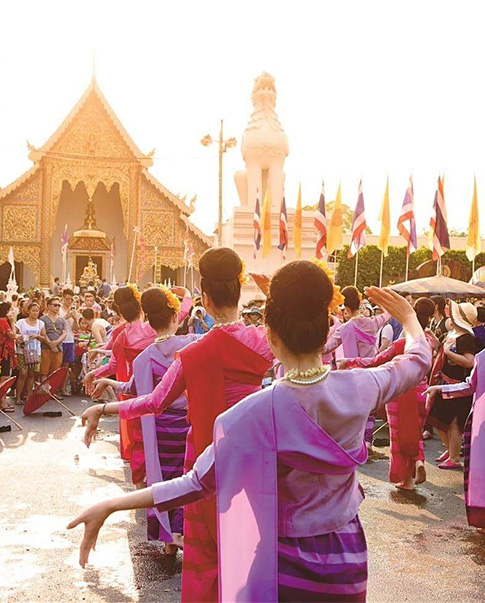
Khmer New Year
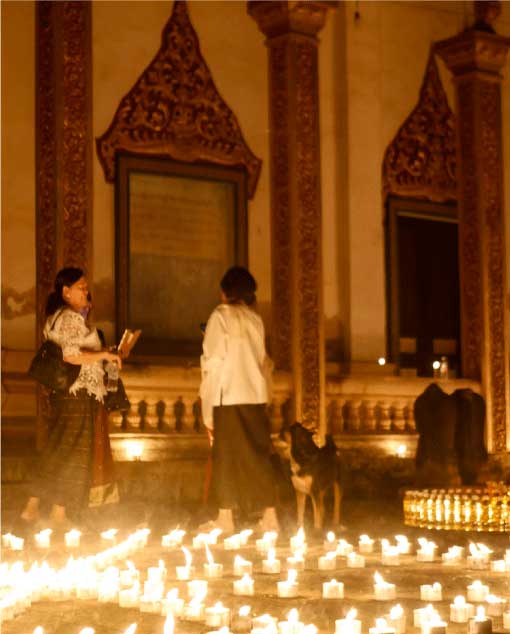
Victory over Genocide Day
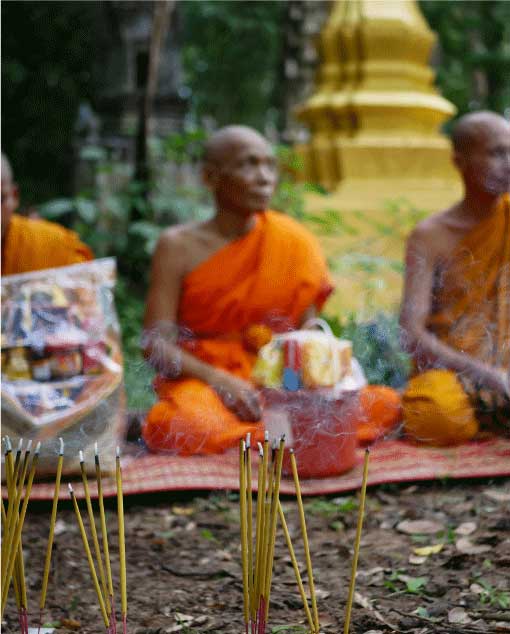
Visak Bochea Day
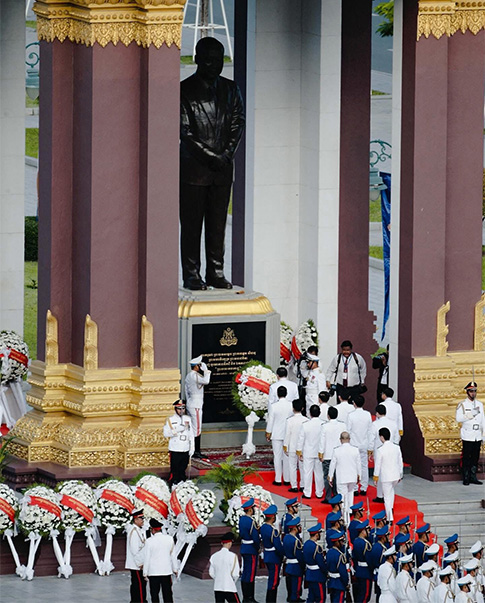
King Norodom Sihamoni's Birthday
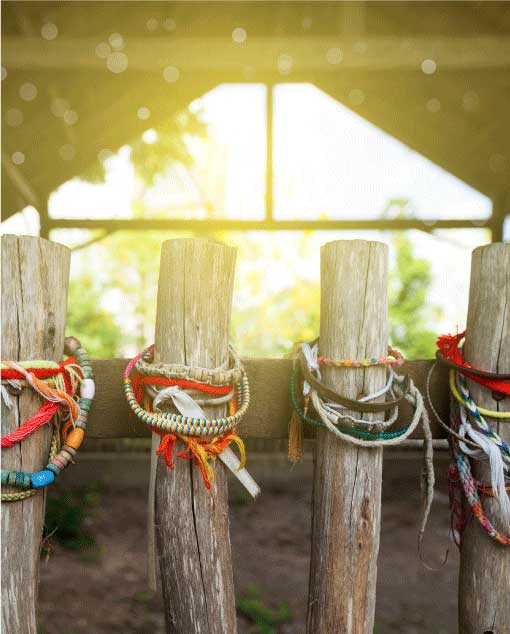
Nation Day Of Remembrance
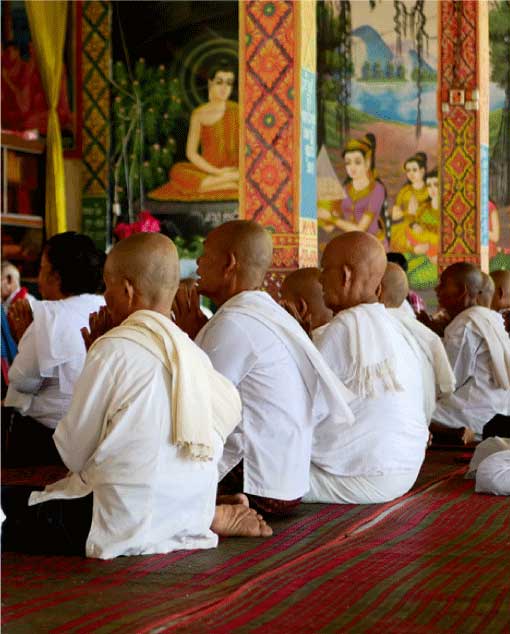
King's Mother Birthday Norodom Monineath Sihanouk
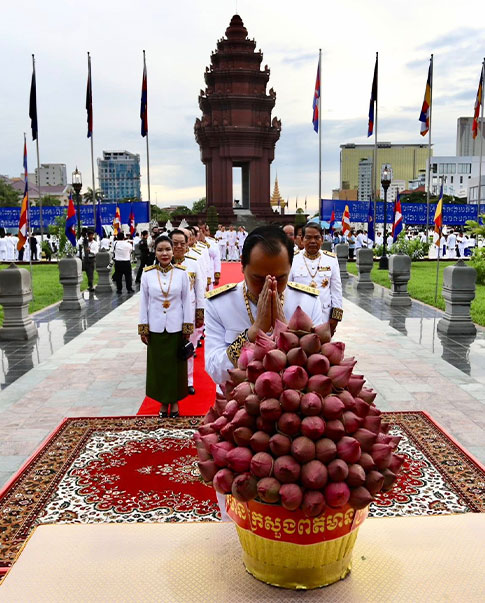
Constitution Day
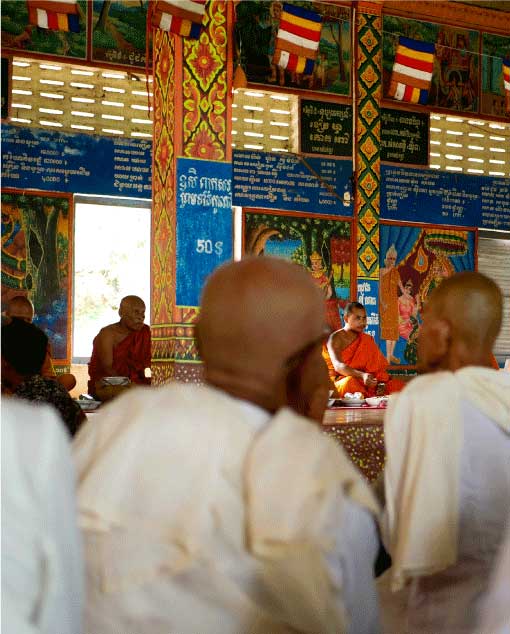
Pchum Ben Ancestors Days
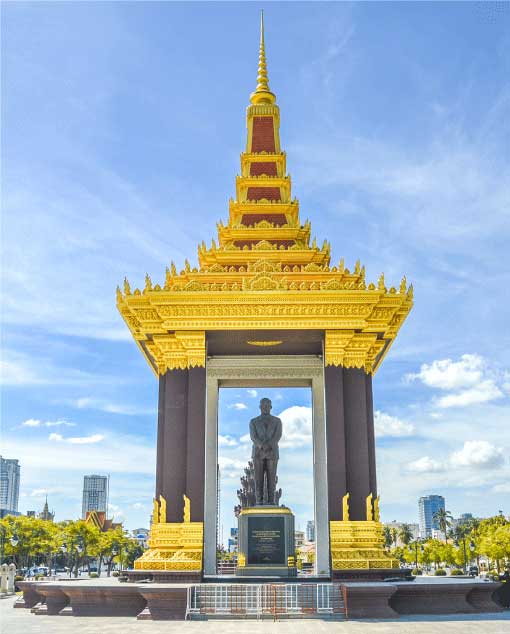
Commemoration Of Late King Father, Norodom Sihanouk
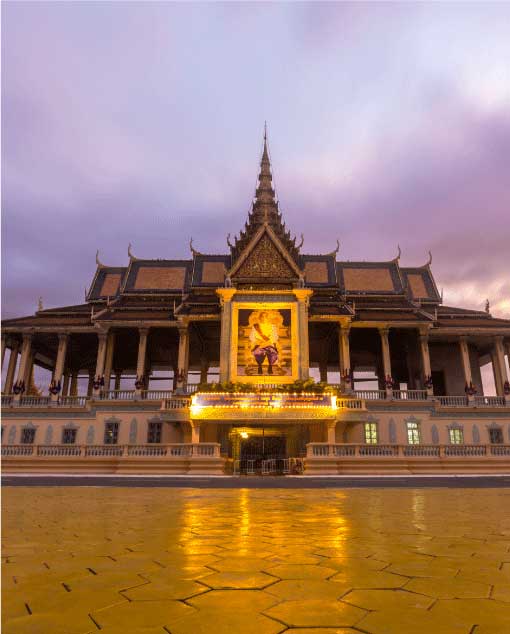
King Norodom Sihamoni's Coronation Day
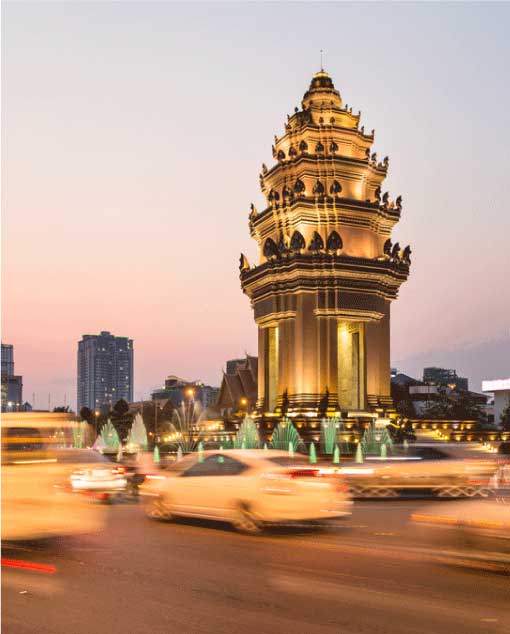
Independence Day
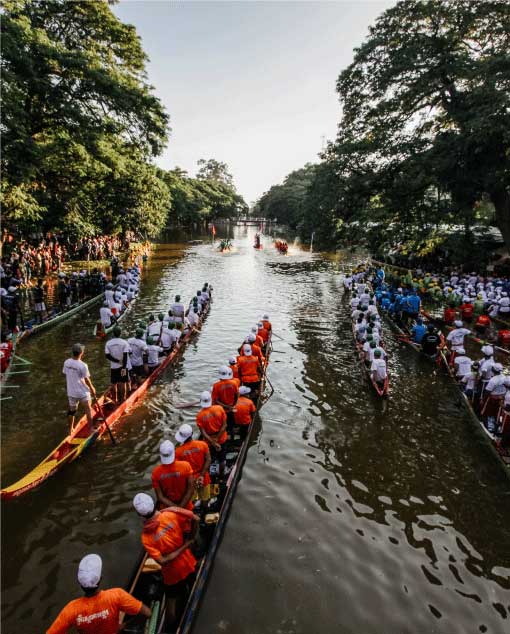
Bon Om Touk (Water Festival)
Useful Information
Strategic travel information for distinguished journeys in Cambodia. Review visa policies, premium transportation solutions, seasonal planning, and essential health and safety guidance tailored for incentive travel, diplomatic visits, and luxury group itineraries.
Neighboring countries: Thailand to the west and northwest, Laos to the north, and Vietnam to the east and southeast. Cambodia also has a coastline on the Gulf of Thailand.
Area: 181,035 km²
Population: 17,638,801 (2026, World Bank)
Religion: Predominantly Theravada Buddhist (~96.5%), with Muslim (~2.6%) and Christian (~0.3%) minorities (recent national statistics).
Currency: Cambodian Riel (KHR). US dollars are widely used in many tourism and urban settings (typical market rate hovers around $1 ≈ 4,020 KHR; rates fluctuate).
Capital: Phnom Penh
National Day: Independence Day is celebrated annually on 9 November.
Electric Plug Type: 230V, 50Hz. Common plug types include A (two flat pins), C (two round pins), and G (three rectangular pins). A universal adapter is recommended.
Visa requirement
Most foreign nationals require a visa to enter Cambodia (tourist or business). Your passport should be valid for at least 6 months beyond your planned departure date.
Cambodia e-Arrival Card (mandatory)
All travelers are required to submit the Cambodia e-Arrival Card within 7 days before arrival via the official website or mobile app. This digital process supports immigration and customs pre-arrival submission.
- Official portal: Cambodia e-Arrival (official)
Visa on Arrival (tourist visa)
Tourist visas are commonly available on arrival at international airports and many land borders (fees and procedures can change; prepare a passport photo and cash as required).
e-Visa (online)
Cambodia’s official e-Visa platform offers online applications with official fees of USD 30 for a tourist e-Visa (single entry). Processing is typically a few business days.
- Apply here: Cambodia e-Visa (official)
- e-Visa applicants are also asked to complete Cambodia e-Arrival within 7 days before arrival.
Entry points: e-Visa is accepted at designated airports and selected land borders. Note that accepted points can change (for example, the official portal indicates Techo International Airport (KTI) as an e-Visa airport entry point, and some land crossings may be restricted for e-Visa holders from time to time). Always verify your planned entry point on the official e-Visa site before ticketing.
Embassy/Consulate visa (pre-arranged)
For travelers who are not eligible for visa on arrival or e-Visa (or for special visa categories), apply through a Cambodian Embassy/Consulate before departure. Allow at least 7 working days in peak periods.
Important: Eligibility rules can vary by nationality and may change. Confirm the latest entry requirements before travel.
For flights to and within Cambodia, a common baseline is around 20 kg checked baggage plus 7 kg cabin baggage, but allowances are not standardized. Limits vary by airline, route, cabin class, and fare type (especially promotional/light fares).
To avoid airport surcharges, confirm your exact baggage allowance and size/weight rules on your airline’s official website or e-ticket itinerary, and pre-purchase extra baggage online when available.
Cambodia has a tropical climate with two main seasons: a dry season (typically November to April) and a wet/green season (typically May to October).
- Dry season (Nov–Jan): comfortable weather and peak travel demand, especially for Angkor and cultural touring.
- Green season (May–Oct): fewer crowds and lush landscapes; showers are often short and tend to fall later in the day, which is easy to plan around for sightseeing and group programs.
Flying into Cambodia
Cambodia’s main international gateways include Phnom Penh, Siem Reap, and Sihanoukville.
Phnom Penh – Techo International Airport (KTI)
• New primary gateway serving Phnom Penh metropolitan area (opened for operations in 2025). Allow roughly 45–75 minutes for transfers to central Phnom Penh depending on traffic and routing.
Siem Reap Angkor International Airport (SAI)
• Approximately 50+ km from Siem Reap; allow around 60–90 minutes to most hotels depending on traffic and location.
Sihanoukville International Airport (KOS)
• Approximately 15–25 km from town; allow around 30–45 minutes depending on your destination zone.
Note: International airports typically offer currency exchange, SIM card purchase options, and basic food and beverage services.
Overland entry & buses
Overland routes from Thailand, Vietnam, and Laos are possible through international border gates. For large groups, we recommend traveling with a tour leader and confirming visa/e-Visa eligibility for your selected border crossing before departure.
Domestic airlines
Air Cambodia (formerly Cambodia Angkor Air) and other carriers operate selected domestic routes (availability can be seasonal). Flights are useful for time-sensitive itineraries linking Phnom Penh, Siem Reap, and coastal regions.
Getting around Cambodia
Road travel is the primary mode between cities. For school travel, incentive trips, and multi-day group itineraries, private coaches offer the best control over timing, comfort, and duty-of-care standards.
Trains
Rail services exist on limited corridors and can be a scenic novelty rather than the fastest option. Most visitors rely on private vehicles or scheduled coaches for intercity transfers.
Taxis & tuk-tuks
Tuk-tuks are common in Phnom Penh, Siem Reap, Battambang, Kampot, and Kep. Using reputable ride-hailing or pre-arranged transport helps reduce fare negotiation and improves pickup accuracy for groups.
Cultural etiquette
Cambodian culture is strongly influenced by Theravada Buddhism and Khmer traditions. A respectful approach improves experiences at temples, villages, and heritage sites.
- Dress appropriately: modest clothing is appreciated. At temples and sacred sites, cover shoulders and knees (entry may be refused otherwise).
- Royal family: avoid disrespectful comments; treat royal imagery with respect.
- Avoid touching someone’s head; it is considered disrespectful.
- Do not point at people (use an open hand gesture instead).
- In temples, keep voices low, avoid pointing feet toward Buddha images, and follow posted directions and staff guidance.
- Always ask permission before photographing individuals, especially in rural communities.
Angkor visitor code of conduct
Angkor is a protected cultural heritage zone. Follow site rules to support conservation and visitor safety.
- Dress code: respectful dress is expected at sacred monuments.
- Monuments: do not touch carvings, climb fragile structures, or remove any artifacts; avoid actions that can damage surfaces.
- Safety: follow barriers and signs; avoid unstable stones and restricted areas.
- Smoking & littering: respect no-smoking areas and keep the site clean.
- Children: avoid giving money or candy directly to children; choose reputable community programs instead.
- Monks: ask permission before photos; women should avoid touching monks.
National currency
Cambodia’s official currency is the Riel (KHR). In many cities and tourist areas, US dollars are also commonly used for pricing and payment.
Exchange rate
The USD/KHR rate typically trades close to 4,000–4,050 KHR per USD (market rate varies by day and provider). In local markets, a rounded rate is often used for convenience, while banks/hotels may apply their own rates.
IMPORTANT: DAMAGED US DOLLAR BILLS MAY BE REFUSED.
Even small tears, heavy creases, or stains can lead to rejection. Bring clean, newer USD notes or plan to use KHR for daily spending.
Credit cards
Cards are widely accepted at higher-end hotels, larger restaurants, malls, and established retailers in Phnom Penh and Siem Reap. Smaller shops and rural areas remain more cash-based. Card surcharges may apply.
ATMs
ATMs are available in major cities and many tourist towns; some dispense USD and/or KHR depending on the bank. Withdrawal limits and fees vary by bank and card issuer. As anywhere, use ATMs in well-lit, secure locations.
Tips
Tipping is not mandatory, but it is appreciated in tourism settings (guides, drivers, porters, and housekeeping). For group travel, a planned tipping budget simplifies operations and ensures consistent service recognition.
Cambodian dishes travelers are likely to come across:
- Amok: a signature Khmer curry, traditionally steamed in banana leaves (often fish, but chicken and vegetarian versions are common).
- Bai Sach Chrouk: a popular breakfast of grilled pork with rice, often served with pickles and broth.
- Lap Khmer: lime-forward beef salad with herbs and aromatics; flavors range from mild to spicy.
- Nom Banh Chok: “Khmer noodles” with rice vermicelli and a fragrant fish-based green curry gravy.
- Kuy Teav: a comforting noodle soup (pork or beef broth) finished with herbs, lime, and crunchy garnishes.
- Loklak: stir-fried marinated beef served with fresh vegetables and a tangy pepper-lime dipping sauce (often with a fried egg).
Duty-free allowances (typical)
For passengers (age restrictions may apply), typical duty-free allowances include:
- Up to 2 liters of wine/alcohol
- 400 cigarettes or 100 cigars or 400g tobacco
- 350 ml perfume
- Medicines for personal use
Currency import/export
Import of foreign currency is not limited, but declaration is required for amounts over USD 10,000 (or equivalent). Export of large foreign-currency amounts may require additional approvals if not declared on entry.
Special items (weapons, controlled goods, pets)
Weapons/ammunition and certain controlled items require prior permits. Pets typically require a veterinary health certificate and rabies vaccination documentation.
There are no routine vaccination requirements for most travelers entering Cambodia, but travelers should be up to date on routine vaccines. Many travel-health authorities commonly recommend considering Hepatitis A and Typhoid, with Hepatitis B, Rabies, and Japanese encephalitis considered for longer stays, rural travel, or high-exposure activities.
Mosquito-borne illnesses (including dengue) occur in Cambodia. Use repellent, wear long sleeves in the evening, and choose screened/air-conditioned accommodation when possible. Seek medical advice promptly if fever develops.
Your home embassy may be able to assist with advice during emergencies or serious problems. Consider registering your trip if your government offers a traveler enrollment service.
If calling a Cambodian emergency number, English support may not always be available. When possible, ask a Khmer speaker to assist.
- Police: 117
- Fire: 118
- Ambulance: 119
Phnom Penh
Calmette Hospital
Address: 3, Boulevard Monivong, Phnom Penh
Telephone: +855 (0) 23 426 948
Pasteur Institute
Address: No. 5, Boulevard Monivong, Phnom Penh 12201
Telephone: +855 (0) 23 426 009
Siem Reap
Royal Angkor Hospital
Address: National Route 6 (Airport Road), Krong Siem Reap 17000
Telephone: +855 (0) 63 761 888
Provincial hospital ambulance (Siem Reap): +855 (0) 63 761 119
Pre-departure tasks
- Ensure your passport is valid for at least 6 months beyond travel dates.
- Confirm visa method (e-Visa / visa on arrival / embassy visa) and submit the Cambodia e-Arrival within 7 days before arrival.
- Consider medical, baggage, and trip disruption insurance (highly recommended for groups).
- Consult a travel clinic regarding recommended vaccinations and any personal medical needs.
Clothes
- Lightweight, breathable clothes (hot and humid conditions are common).
- Long sleeves/trousers for mosquito protection (especially evenings and rural areas).
- Hat and sunglasses for sun protection.
- Temple-ready clothing covering shoulders and knees.
- Comfortable shoes for temple walking and uneven ground.
Pharmacy
- Insect repellent and bite-relief cream.
- Hand sanitizer and antiseptic wipes.
- Basic first-aid kit (plasters, blister care, bandage, antiseptic).
- Paracetamol/acetaminophen for fever/pain (use medicines as directed by a clinician).
- Antihistamines and cold-symptom relief as needed.
- Sweat-resistant sunscreen (SPF 30+) and lip balm with SPF.
- Oral rehydration salts and an anti-diarrheal medicine for emergencies (per medical advice).
- Prescription medicines in original packaging, plus a copy of the prescription.
Misc.
- Digital and printed copies of key documents (passport bio page, insurance, flights, hotel bookings, e-Arrival confirmation/QR).
- Passport photos (useful for certain visa processes if required).
- Cash (USD and/or KHR) for incidentals and possible on-arrival fees; bring clean, undamaged USD notes.
Why Partner with Asia Travel & Leisure
Local offices across 6 cities
Strategically located offices in major cities, ensuring reliable and efficient service in each destination.
Multilingual team
A dedicated team fluent in multiple languages, offering seamless communication for diverse international clients.
Risk management & 24/7 support
Comprehensive risk management strategies with 24/7 support, ensuring a safe and worry-free travel experience.
Long-term supplier relationships
Strong, trusted relationships with local suppliers, ensuring quality services and unique experiences.
Sustainable & responsible travel commitment
Committed to sustainable tourism practices, ensuring responsible and eco-friendly travel experiences.




















Welcome to Asia Travel & Leisure, your premier Southeast Asia DMC specializing in authentic B2B travel experiences across Vietnam, Laos, Cambodia, Myanmar, and Thailand.


